
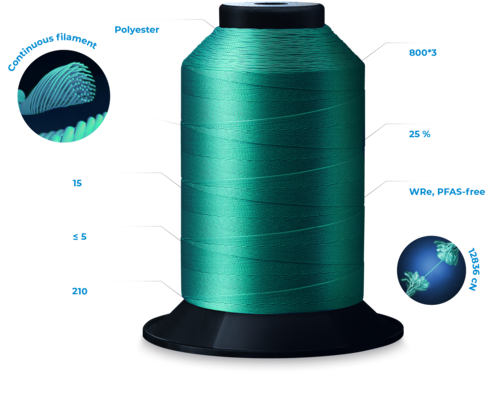
Create seams that deliver technical performance without compromising wearing comfort.
Seam softness is a key quality factor wherever a garment is worn directly against the skin. A seam may be strong and elastic, yet still feel bulky, hard or abrasive. This is particularly relevant in underwear, lingerie, activewear, sportswear, bikewear, children’s clothing and other close-to-skin applications.
A soft seam is never the result of the sewing thread alone. It is created by the interaction between the thread construction, thread size, stitch type, stitch density, thread balance, material and machine settings. The objective is to reduce rigid thread accumulation and noticeable loops while maintaining the required seam strength and elasticity.
What makes a seam feel soft?
The perceived softness of a seam depends on how much thread is present, where the interlooping is positioned and how the seam lies against the body. Fine and supple thread constructions reduce seam presence. Texturised microfilaments can create an especially soft and flexible touch, while balanced tensions help prevent bulky or distorted stitch formation.
Key factors to consider
- Thread construction: Microfilament and texturised constructions provide a soft and supple character. Fine continuous filaments can reduce seam presence, while conventional core spun threads may be suitable where a universal sewing concept is required.
- Needle and looper thread: The looper thread is often visible on the skin-facing side, but the needle-thread loops can be just as important. Both thread systems must therefore be considered.
- Stitch type and thread balance: Stitch structures distribute different amounts of thread on the material surface. An incorrect thread balance can create rough loops or excessive bulk.
- Stitch density: A higher stitch density increases the amount of thread within a defined seam length and may make the seam feel firmer.
- Material and seam position: The same thread can feel very different on a soft knit, a dense woven fabric or a laminated material. The orientation of the seam against the body also matters.
Typical applications
- Bras and lingerie
- Underwear and base layers
- Sportswear and activewear
- Bikewear and fitnesswear
- Children’s clothing
- Medical and close-to-skin textiles