Intro
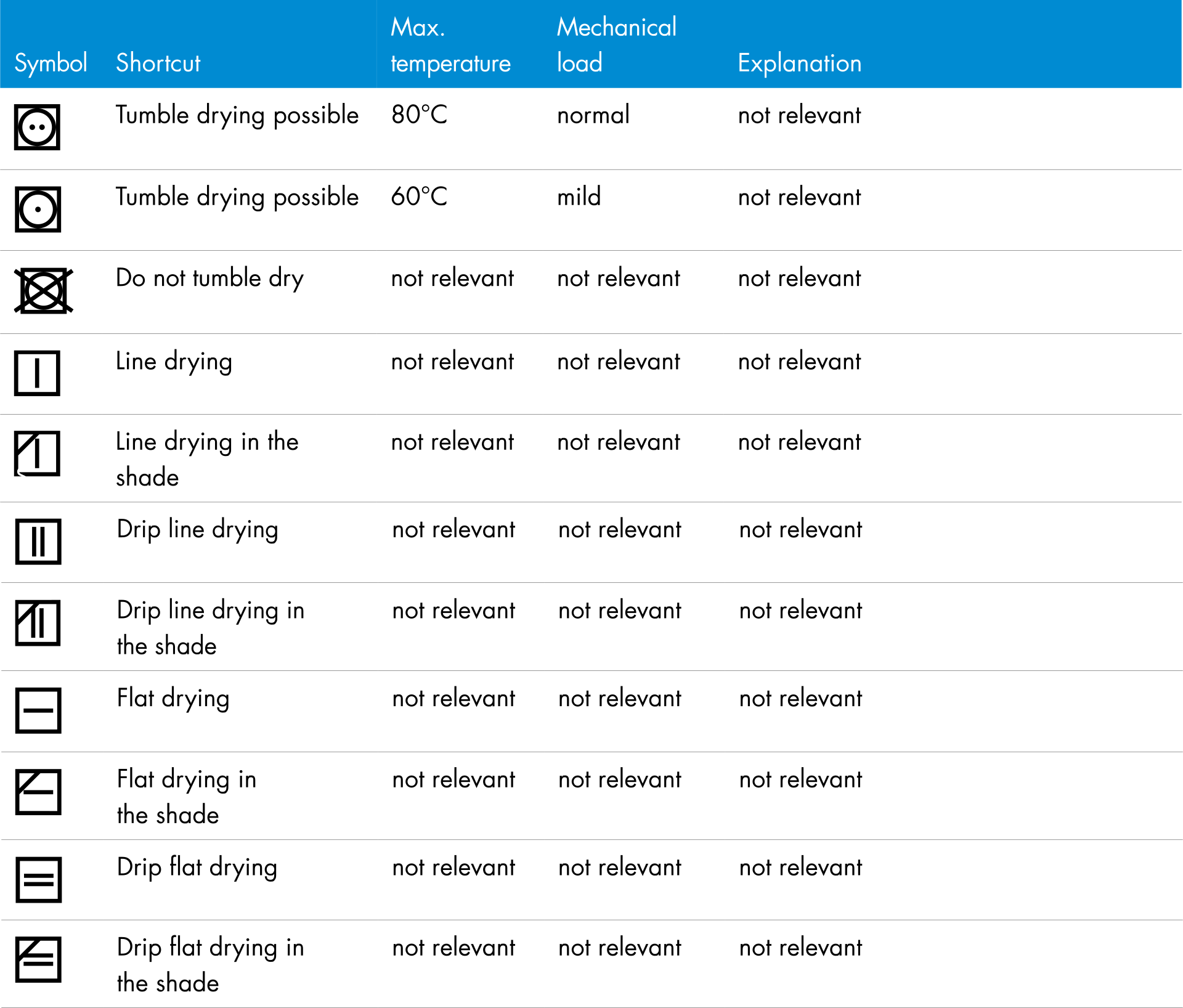
- Indicates whether tumble drying is permitted. The symbol consists of a square containing a circle and one or more dots.
- The number of dots indicates the drying temperature setting.
- Natural drying methods are represented by horizontal or vertical lines within the square.
- A diagonal line indicates that the article must not be exposed to direct sunlight during drying.
- Drying procedures and testing are carried out in accordance with ISO 6330.
- Colour change is assessed according to DIN EN 20105-A02, and staining (bleeding) according to DIN EN 20105-A03.
FAQ
-
The drying symbol specifies whether tumble drying is permitted and provides information about the recommended drying method and temperature level. It may also indicate natural drying requirements.
-
The dots indicate the maximum drying temperature. One dot represents a low temperature setting, while two dots indicate a higher temperature suitable for more robust textile materials.
-
Tumble drying uses heated air and mechanical action inside a dryer. Natural drying relies on air drying, such as line drying or flat drying, without the use of a tumble dryer.
-
A diagonal line within the drying symbol indicates that the article should be dried away from direct sunlight. This helps minimise colour fading and protects sensitive fibres from excessive UV exposure.
-
High drying temperatures may influence colour fastness, dimensional stability and seam appearance. Excessive heat can increase shrinkage or contribute to seam distortion if the thread and fabric behave differently.
-
Flat drying means placing the textile article on a horizontal surface during drying. This method helps maintain shape and dimensional stability, especially for delicate or stretch-sensitive products.
-
Drying performance is assessed according to ISO 6330. Evaluations may include colour change, staining behaviour, dimensional stability and overall appearance after drying treatments.
-
Sewing threads should be compatible with the drying conditions expected during the product lifecycle. This is particularly important for garments exposed to repeated industrial laundering and drying processes.