
Short definition
Some seam puckering cannot be attributed to feeding, thread tension or yarn displacement alone. Material shrinkage, incompatible fabric and thread combinations, sewing parameters or finishing processes may also contribute to seam distortion.
Handling
Uneven feeding and pulling during sewing can lead to unwanted puckering of the seam. Manual processes are subjective and therefore not reproducible. This can be remedied by additional machine equipment, which can be provided by the respective machine manufacturers depending on the machine type and class.
Machine
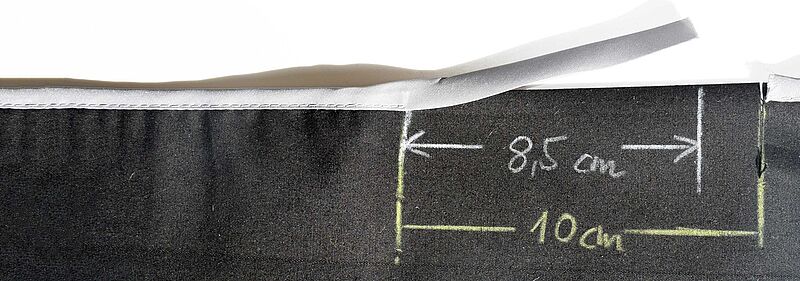
Particular attention should be paid to the coordination between the machine and the material. For example, if the top feed is set too slow or too fast, a puckered seam can easily occur. When piping edges or sewing in zips, it is also quickly apparent if the piping tension has been set too tight. See also the following image.
Processing parameters
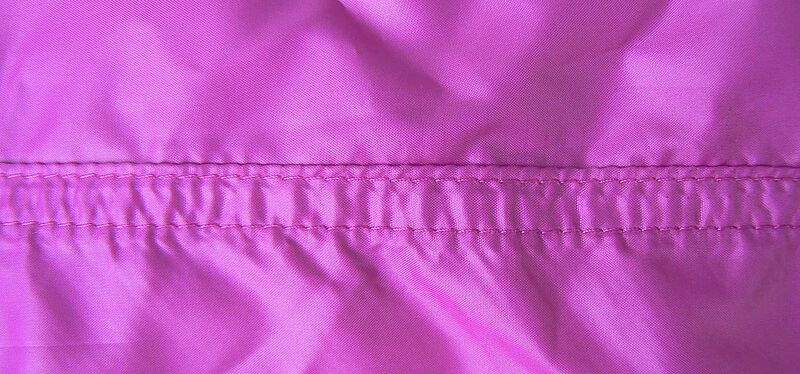
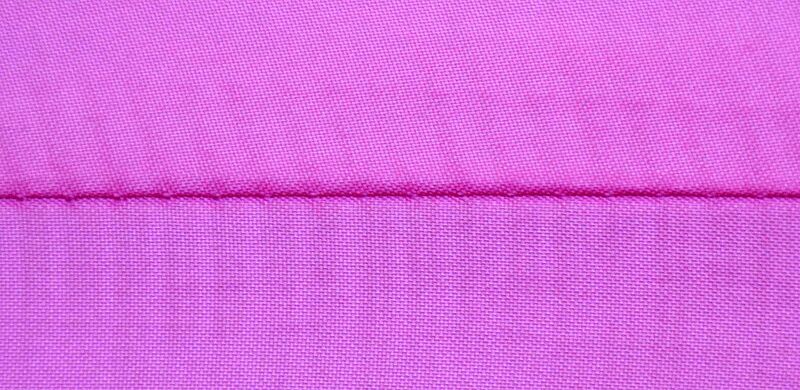
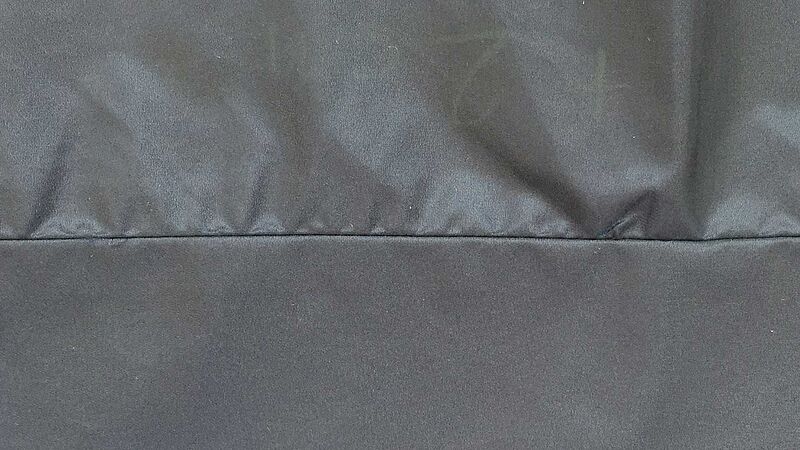
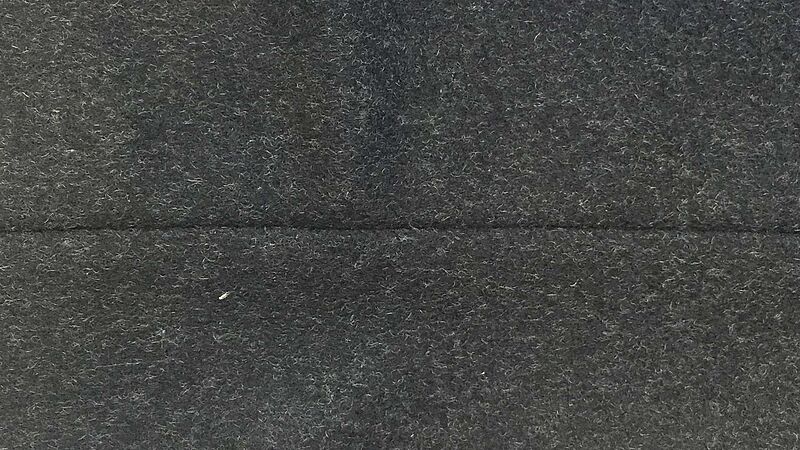
Some fabrics that are prone to puckering cannot tolerate multiple topstitched seams. This exacerbates the issues of tension and displacement puckering. The only way to achieve a smooth seam appearance is to omit any topstitching. See the photos below.
Pattern making
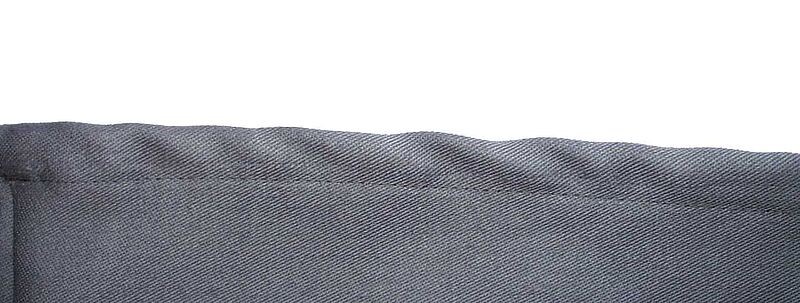
In the case of non-congruent seam lines, such as the Viennese seam or sleeve insertion seams, pucker-free topstitching is technically not possible. In this case, it makes most sense to avoid topstitching. Where topstitching is still desired, it is recommended to stitch as close as possible to the closing seam, where the excess fabric is still as small as possible.
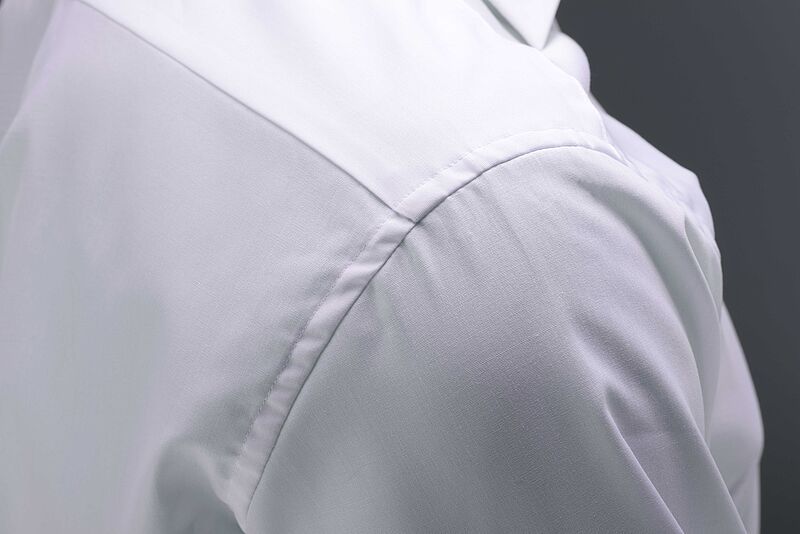
The same applies to hems on curved cut edges ( curved hems, etc.). One way to achieve pucker-free seams in such cases is to bind the edges with a matching facing.
Material properties
If seam puckering occurs due to the properties of the outer fabric, such as density, weave, raw material or finish, sewing tests prior to production are strongly recommended. This is the only way to determine whether this material can be processed to achieve the desired look.
Quick facts
| Property | Value |
|---|---|
| Category | Seam quality |
| Primary cause | Shrinkage, finishing, material interaction |
| Occurs | During or after sewing |
| Can be prevented | In most cases |
| Difficulty | Medium to high |
Also known as
Technical terms
- Secondary causes of seam puckering
- Multi-cause seam puckering
- Differential shrinkage puckering*
*where shrinkage is the primary cause.
Common descriptions
- The seam puckers after washing.
- The seam changed after ironing.
- The fabric shrank after finishing.
- The seam looked fine before washing.
- The wrinkles appeared after laundering.
- The seam changed after pressing.
International terminology
| Language | Common terminology |
|---|---|
| English | Other causes of puckering, Secondary seam puckering, Shrinkage puckering, Differential shrinkage puckering, Post-sewing puckering, Multi-cause seam puckering |
| German | Schrumpfkräuseln, Kräuseln nach der Wäsche |
| French | Fronces dues au retrait |
| Italian | Arricciatura dovuta al restringimento |
| Spanish | Fruncido por encogimiento |
| Chinese | 收缩起皱 |
| Vietnamese | Nhăn do co rút |
FAQ
-
Other causes include fabric shrinkage, thread shrinkage, and finishing processes. Environmental conditions can also play a role.
-
Yes, shrinkage during washing or heat exposure can distort seams. This may reveal or worsen puckering.
-
If fabric shrinks unevenly, the seam may become distorted. This leads to visible puckering after processing.
-
Yes, thread shrinkage can pull the fabric together. This creates tension along the seam.
-
Yes, incompatible combinations of fabric and thread increase the risk of puckering. Matching materials is essential.
-
Humidity and temperature can affect fabric and thread behavior. These factors should be controlled during production.
-
Testing helps identify potential issues before production. It allows optimization of materials and settings.
-
Not always, it can appear after finishing processes or during use. This makes preventive testing even more important.