
Intro
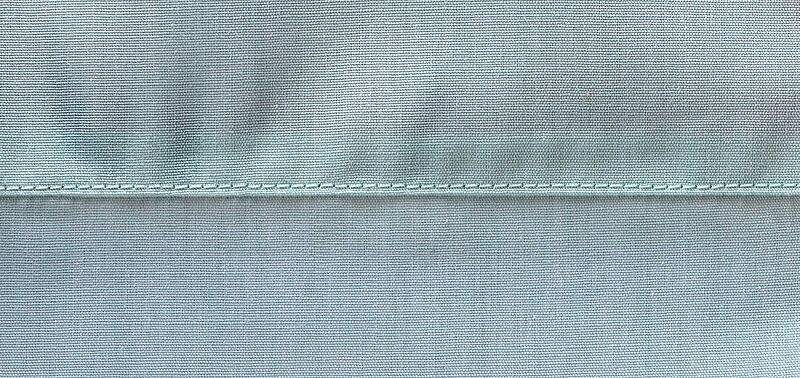
Feed puckering is a common processing issue that affects seam appearance and overall garment quality. It occurs when one fabric layer is transported differently from the other during sewing. Understanding its characteristic appearance helps to identify the root cause and select the appropriate corrective action.
Distinguishing feature
- Puckering is asymmetrical to the seam.
- Only one fabric layer shows visible wrinkles.
- The opposite fabric layer remains smooth, making feed puckering easy to distinguish from other seam defects.
Problem
Uneven transport of the upper and lower fabric layers during sewing. This creates a length difference between the two layers, resulting in visible puckering after the seam is formed.
Explanation
With a sewing machine, the lower layer of fabric is pushed forward by the feed dog during simple bottom feed. The presser foot presses down on the fabric and creates static friction, which causes the upper layer of fabric to be pulled along. This leads to transport puckering, especially with smooth fabrics. Excessive presser foot pressure intensifies this effect.
Solution
- Set the presser foot pressure as low as possible (even fabric feed must still be ensured)
- Select the feed type appropriate for the application (e.g. needle feed, roller feed, top feed, pinch feed, differential feed)
- Select the teeth of the bottom feed according to the top material (e.g. fine teeth for fine materials, coarse teeth for heavy fabrics)
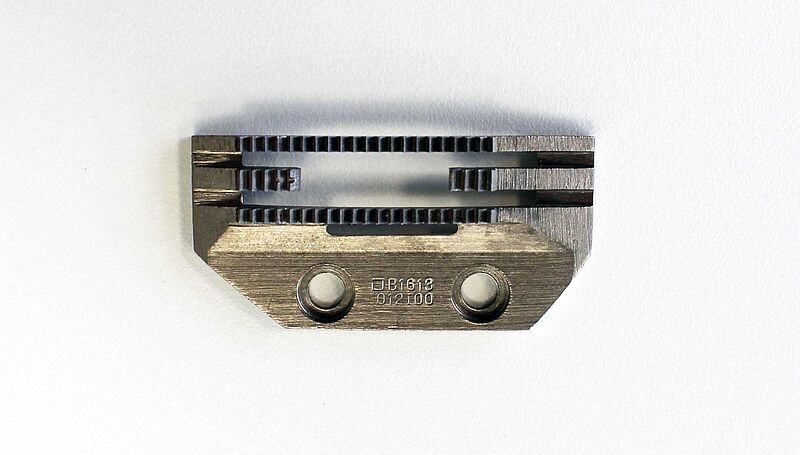
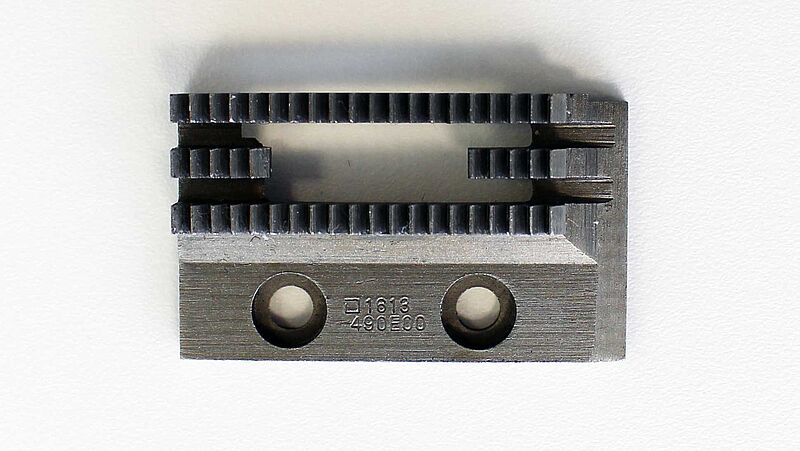
- The teeth of the lower feed dog should only protrude approx. 1 mm above the stitch plate during the lifting movement.
- Replace worn feed dogs (rounded teeth).


- Plastic roller presser foot (gummed, smooth feed surface) for challenging materials
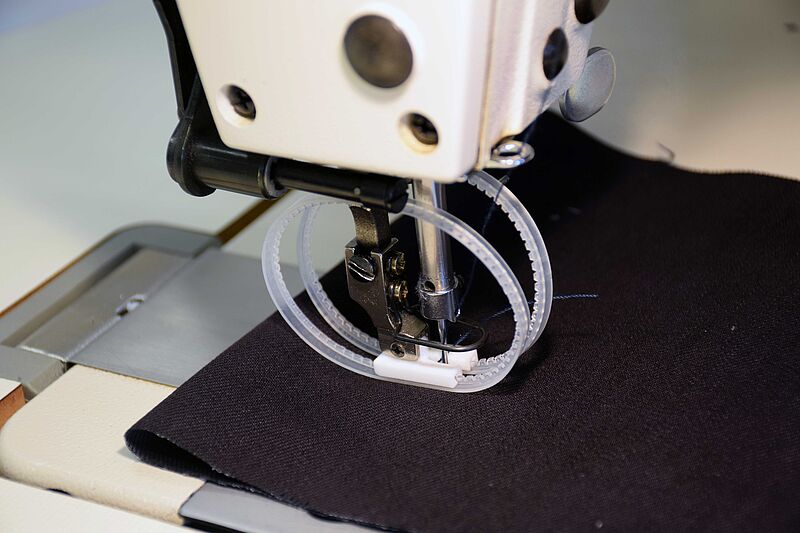
- Use Teflon feet
- For seam constructions with multiple seams, always maintain the seam direction if possible
- Reduce sewing speed
- Use a hinged presser foot (only the presser foot must be moved in rhythm with the feed dog, not the entire presser foot system)
FAQ
-
Feed puckering occurs when fabric layers are not transported evenly during sewing. This leads to gathering or distortion along the seam.
-
It is caused by differences in fabric feeding between the top and bottom layers. Machine settings and fabric friction play a major role.
-
Adjusting differential feed and presser foot pressure helps ensure even fabric movement. Proper machine setup is essential.
-
Lightweight, slippery, or stretchy fabrics are especially sensitive. These materials require precise machine adjustments.
-
Yes, high sewing speeds can worsen uneven feeding. Reducing speed can improve control and seam quality.
-
Incorrect pressure can cause uneven fabric movement. Proper adjustment ensures balanced feeding.
-
Differential feed can significantly reduce feed puckering. However, it must be carefully adjusted for each material.
-
Synchronized feeding prevents layer displacement and distortion. It ensures a smooth and even seam.