
Intro
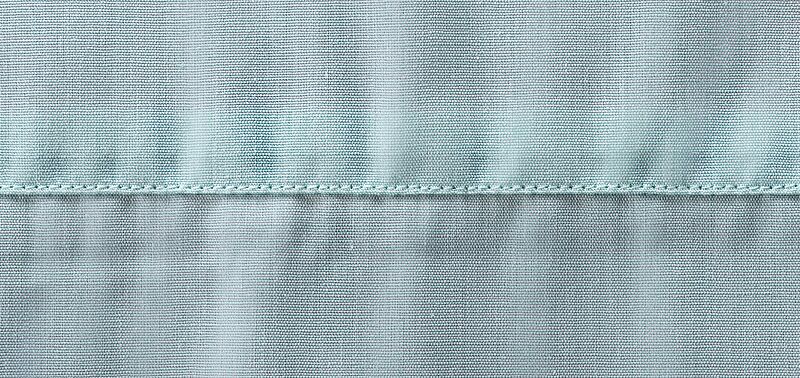
Tension puckering is one of the most common seam appearance defects. It is caused by an imbalance between the forces acting on the sewing threads during stitch formation. Recognising its characteristic appearance helps to identify the underlying cause and choose the appropriate corrective action.
Distinguishing feature:
- Puckering appears on both sides of the seam.
- The fabric relaxes after cutting the stitch bridge
- This beahviour distinguishes tension puckering from feed puckering und structural fabric distortion.
Tension puckering is generally caused by two key factors: incorrect thread balance and an unsuitable amount of thread within the stitch. The following sections explain both causes and their respective solutions.
Thread balance
False thread balance is a primary cause of tension puckering, occurring when the needle and bobbin threads are not evenly distributed within the fabric layers. This imbalance creates uneven stress along the seam, leading to visible wrinkles and distortion that compromise both the appearance and structural integrity of the stitched material.
First Problem
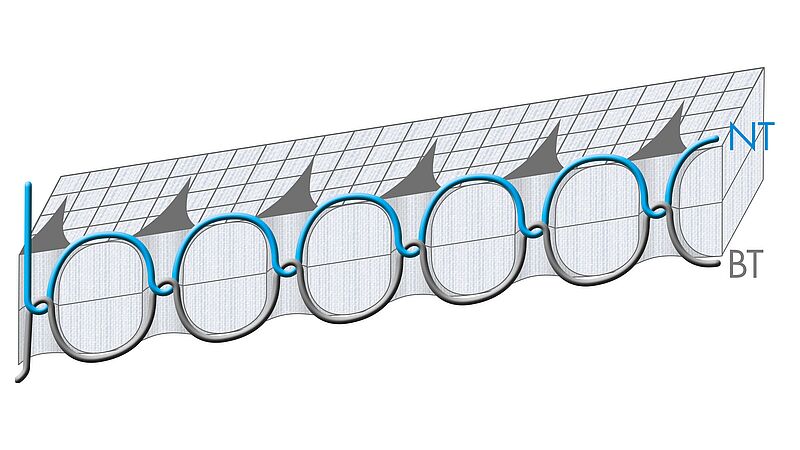
Unfavourable thread balance between needle thread and bobbin thread in double lockstitch
Explanation and solution
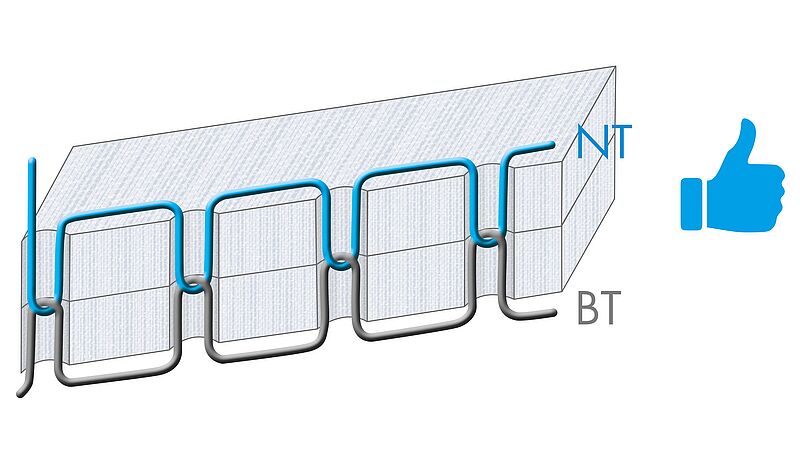
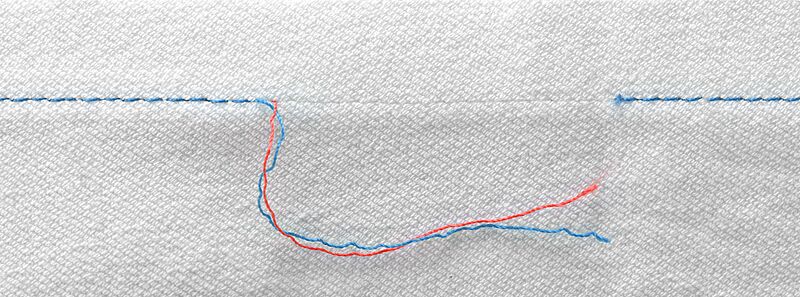
If one of the two threads (needle thread or bobbin thread) is significantly shorter than the other, the stitch formation will not be optimal. Depending on the material, the seam may be compressed and puckering may occur. The amount of thread must be distributed correctly.
Unfavourable thread balance:
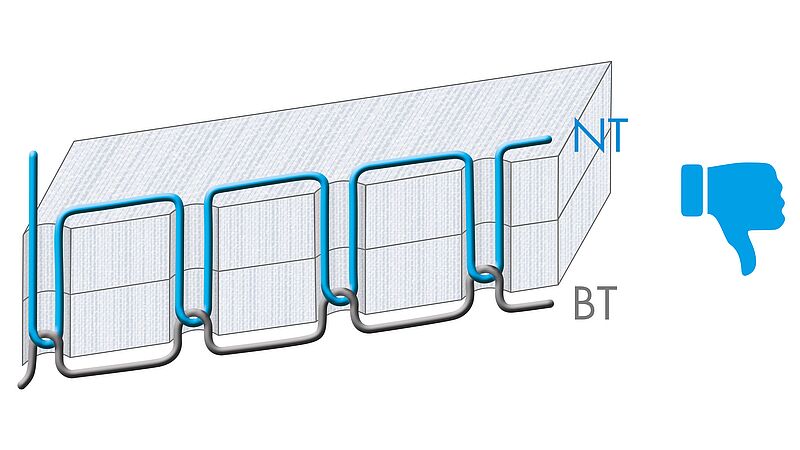
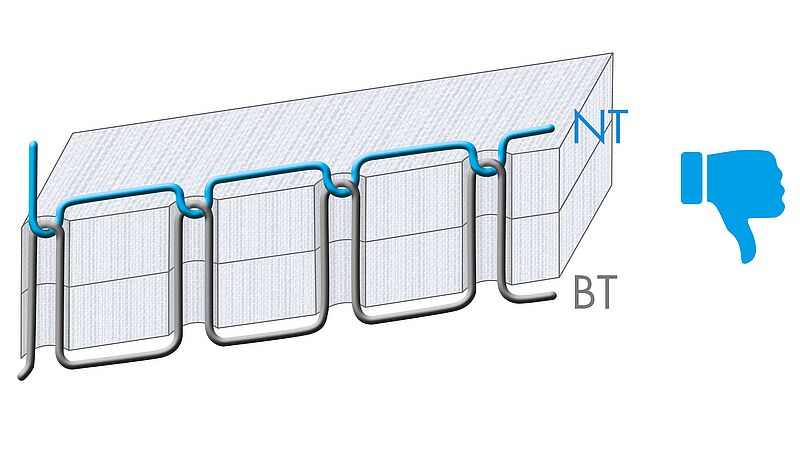
To check the thread balance, it is helpful to unpick a section of the seam. If the thread balance is unfavourable, one thread system will be significantly shorter than the other.
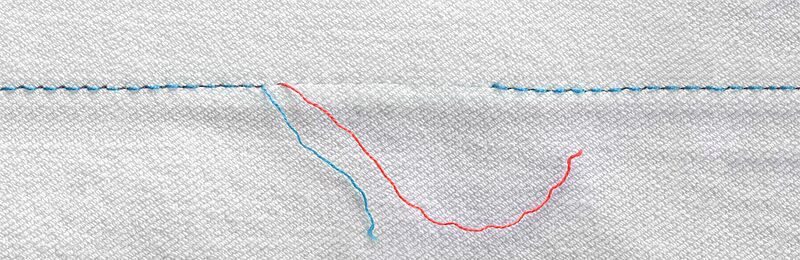
Optimal thread balance:
Second problem
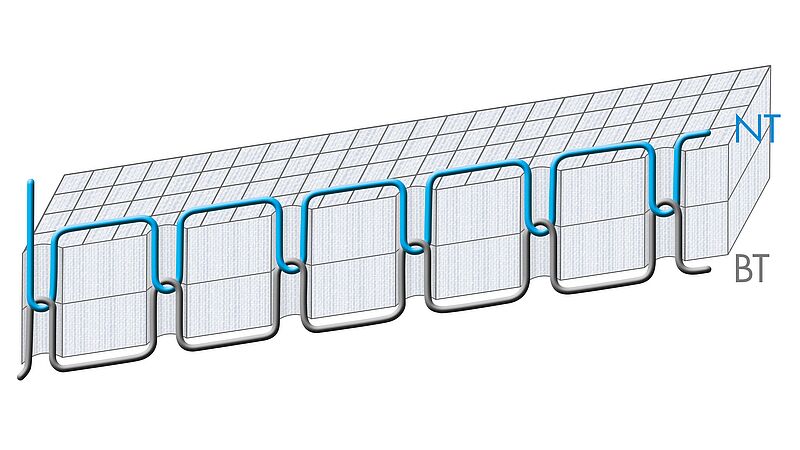
Unfavourable needle and thread balance with the double chain stitch
Explanation and solution
As soon as one of the thread systems is significantly shortened, the stitch feed is no longer optimal. Depending on the material properties, the seam may become compressed and puckering may occur. The thread quantity must be distributed correctly.
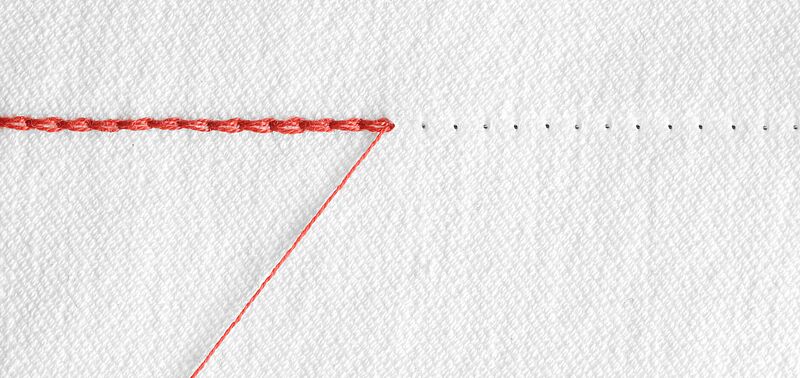
Unfavorable thread balance:
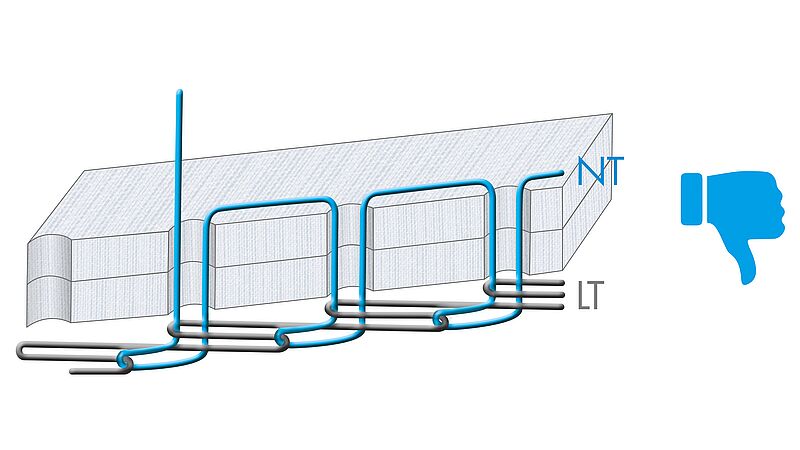
To check the thread balance, it is helpful to unpick a section of the seam. If the needle thread tension is too loose, the needle thread heads are clearly visible on the bottom of the seam. Long loops can be seen after unpicking the seam.
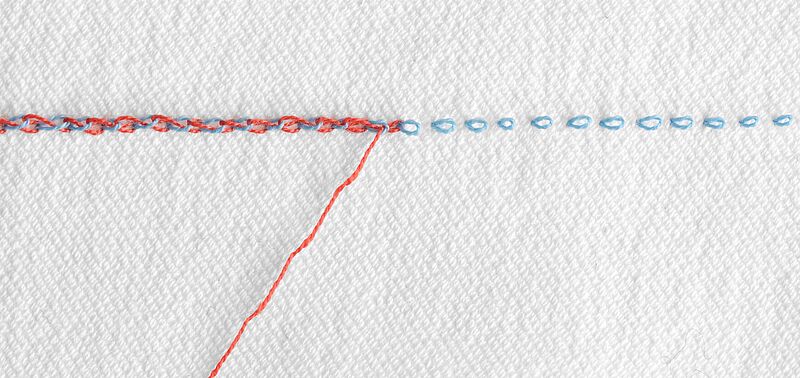
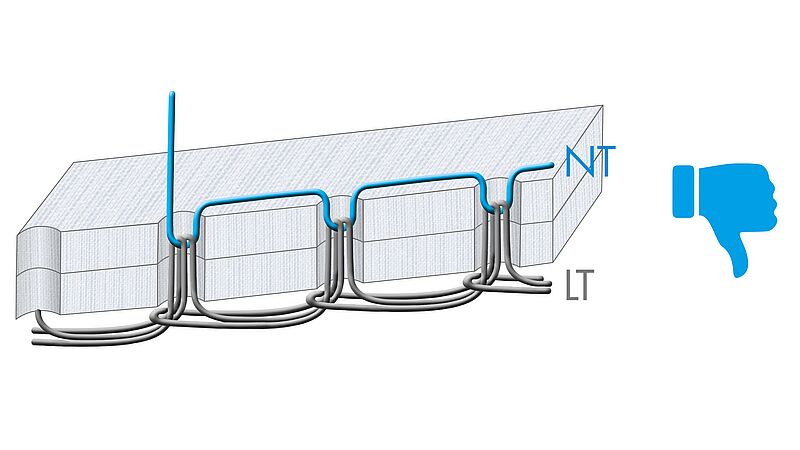
If the needle thread tension is too tight, the needle thread heads disappear into the fabric after unpicking the seam and are no longer visible on the bottom of the seam.
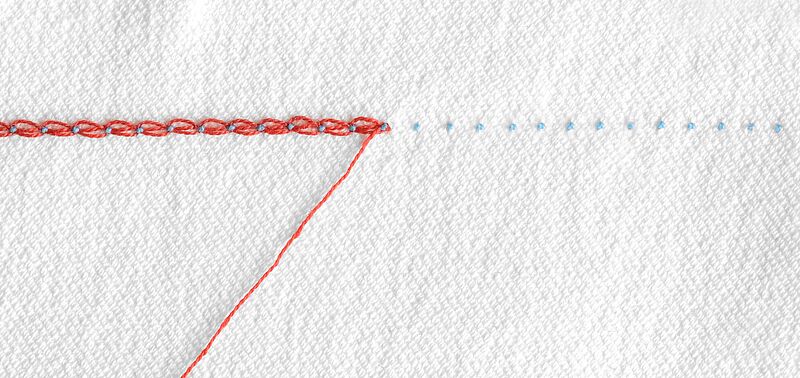
Optimal thread balance:
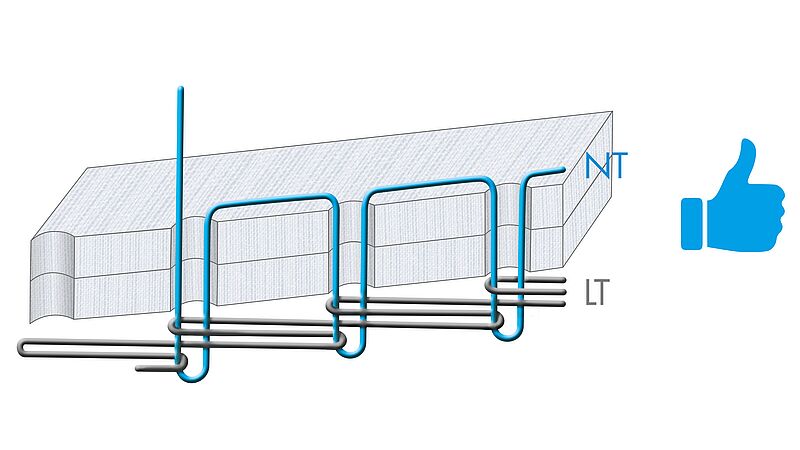
With optimal thread balance, the needle thread heads are visible as small dots (approx. 1–1.5 mm high) after the seam has been pulled.
Thread amount
Incorrect thread amount refers to an imbalance in the quantity of thread used during stitch formation, resulting in inconsistent and unstable seams. This misbalance can increase stress on the fabric and is a key contributing factor to defects such as tension puckering.
Explanation
Tightening the thread tension devices too much causes the needle and/or underthread to be too tight in the seam. The total amount of thread is too small in relation to the length of the seam. This causes the fabric to pucker.
Solution
General rule of thumb: ‘As little as possible, as much as necessary’. To ensure sufficient thread balance in the seam, the thread tension of the needle and underthreads must be set as low as possible. However, a certain minimum thread tension is necessary for controlled thread guidance. With extremely thin and delicate fabrics, slight waves often cannot be completely avoided.
The following applies to double lockstitch machines:
- Wind the bobbin evenly with as little tension as possible.
- Set the bobbin tension as low as possible (yo-yo effect).
- Adjust the needle thread tension accordingly.
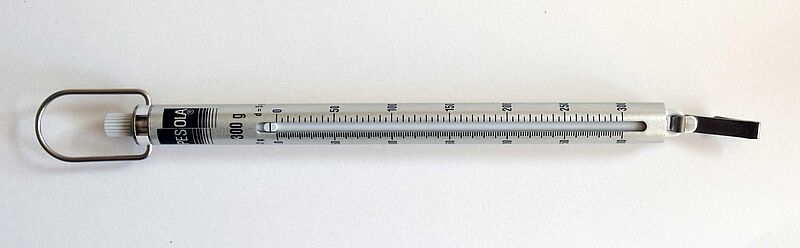
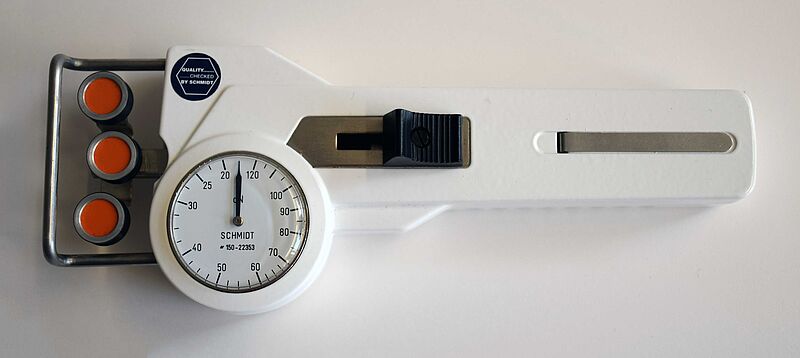
- It is advisable to check the thread tension values regularly. Simple and inexpensive spring scales (e.g. www.pesola.com) or specially developed thread tension measuring devices (e.g. www.zugspannungsmesser.de) are suitable for this purpose. The thread tension values determined depend on the type, condition, maintenance and care of the machine.
- To get an idea of the optimum amount of thread in the seam, the following formulas can be used to calculate the theoretically sufficient thread requirement per stitch. The results should be regarded as rough guidelines.
Formula for the lockstitch (301)
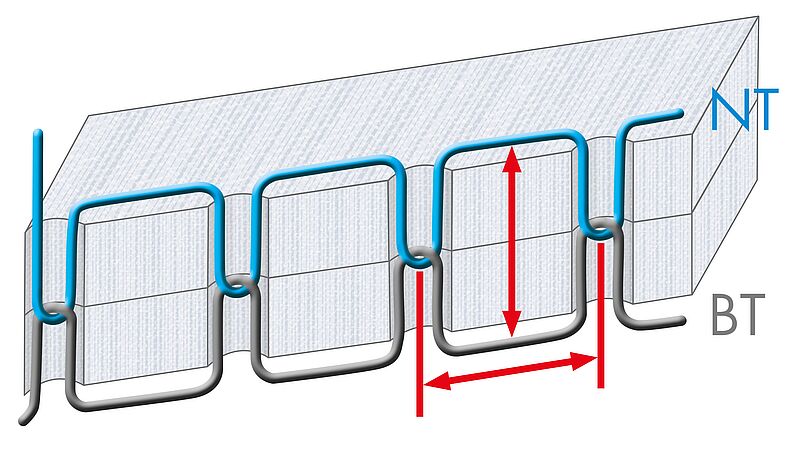
Formula for the double chain stitch

* variable, depending on various parameters (e.g. sewing thread ticket, thread tension)
FAQ
-
Tension puckering is caused by excessive or unbalanced thread tension. It results in fabric being drawn together along the seam.
-
Improper machine settings or unsuitable thread types can lead to imbalance. This creates uneven seam formation.
-
Thread tension must be carefully adjusted and balanced. Testing different settings is essential for optimal results.
-
Yes, thread elasticity and structure affect tension behavior. The right thread helps maintain balanced seams.
-
Yes, imbalance between needle and bobbin thread creates uneven forces. This leads to seam distortion.
-
Short stitches increase tension concentration. Adjusting stitch length can help reduce puckering.
-
Yes, it often appears immediately. It may become more noticeable after finishing processes.
-
Proper tension ensures smooth and stable seams. It is one of the most important factors in preventing defects.