
Intro
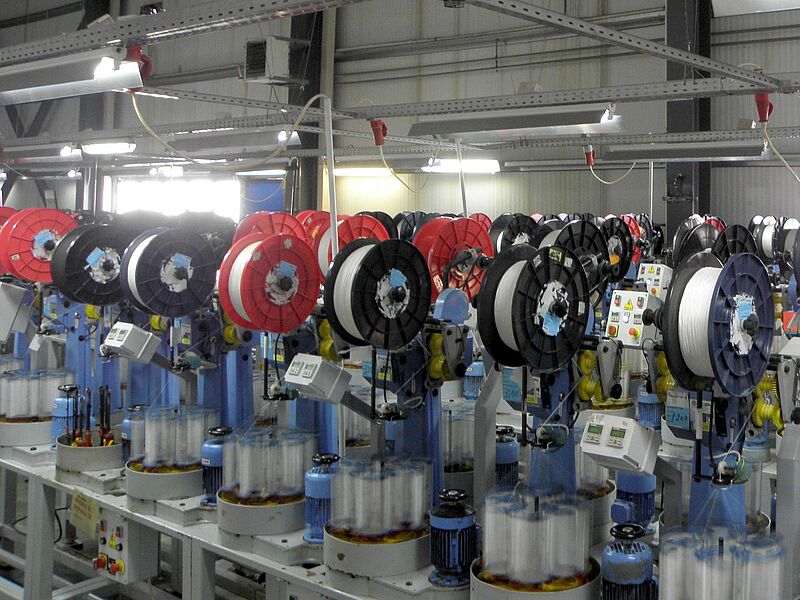
Spun yarns and core yarns contain thick and thin spots, which arise during the processing of the fibres in the spinning mill and cannot be completely avoided. These yarn defects are caused by, among other things, fibre fly, impurities and slubs in the spinning mill and are removed during cleaning on winding machines. At the same time, this process connects the delivered raw yarn into larger, knot-free lengths by splicing the yarn ends together (with air swirling).
The splice points are significantly thinner than a knot (approx. 40%) and ensure acceptable strength at the splice point. A splice point in the yarn has no adverse effect on the sewing performance of the subsequent yarn. Sensors on the winding machines check the yarn purity and compare the detected thick and thin spots with the specification. Thick spots that are thicker than a splice, for example, are automatically cut out and replaced by a splice. The result is purified preliminary products that provide maximum running length for the subsequent production step and thus form the basis for knot-free sewing thread quality.
This step is not necessary for raw yarns made from filament material. Firstly, filament raw yarns do not contain any impurities. Secondly, filament yarns are already supplied in long lengths by the chemical fibre manufacturer.
FAQ
-
Cleaning removes impurities and residues from the yarn. This improves processing and final quality.
-
Impurities can affect dyeing and finishing. This leads to uneven results and defects.
-
Mechanical and chemical processes are used to remove contaminants. This prepares the yarn for further processing.
-
Yes, clean yarn ensures uniform dye absorption. Poor cleaning leads to uneven coloration.
-
Dust, oils, and fiber residues are removed. These can interfere with processing steps.
-
Yes, cleaning is a standard step in most production processes. It ensures consistent quality.
-
It enhances surface quality and process reliability. This leads to better sewing behavior.
-
Yes, proper cleaning reduces defects and rework. This improves overall efficiency.