
Intro
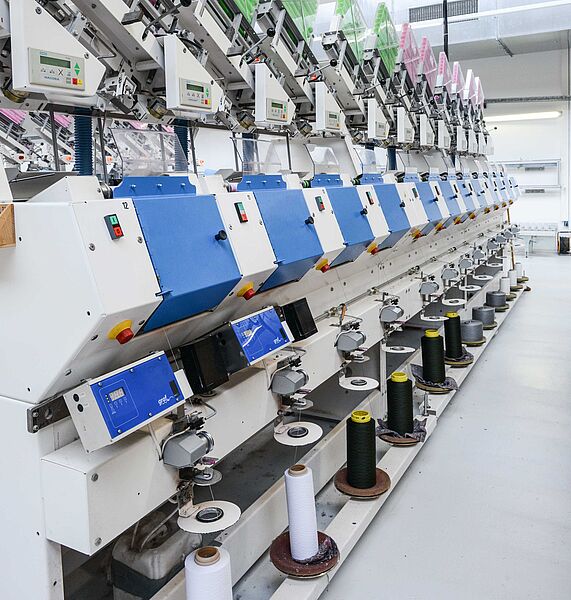
In the winding department, the finished threads are wound onto various types of packaging (cops, cones, foot spools, king spools, etc.). Modern winding machines ensure optimal, identical winding. Today's machines are fully automatic, i.e. the empty tube is inserted and wound automatically. The length and quality of the sewing thread are also checked and monitored.
During labelling, the labelling data is either printed directly onto the spools or onto labels, which are then affixed to/inside the spools. Labelling identifies the products with important product data such as product description, label number, sewing thread raw material, packaging length, colour and batch number. The batch number is particularly important for the automotive industry in order to ensure flawless product traceability. The items are now also marked with barcodes on the cartons, which provide information about the item, colour and batch number.
FAQ
-
Make-up refers to winding the thread onto cones or spools. It prepares the thread for transport and use.
-
Labels include thread type, size, and production details. This ensures traceability.
-
Threads should be stored in dry and controlled conditions. This prevents damage and degradation.
-
Yes, humidity and temperature can impact performance. Proper storage is essential.
-
It allows identification of production batches. This is important for quality control.
-
Proper packaging ensures easy transport and use. It also prevents tangling and damage.
-
Incorrect storage can lead to defects and reduced performance. This affects sewing results.
-
Packaging protects threads from damage and contamination. It ensures quality during transport.