
Intro
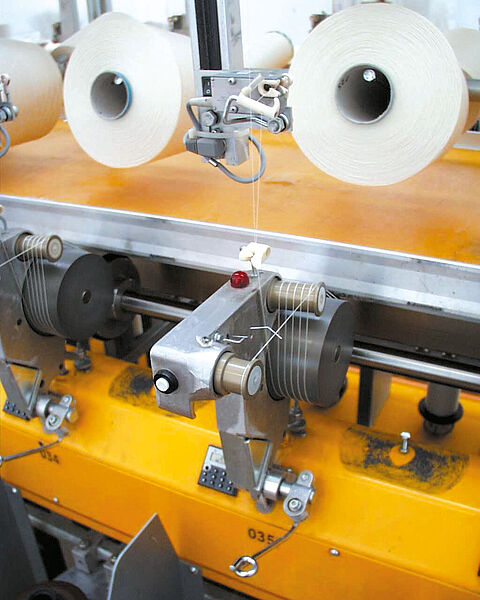
Twisted yarns consist of two or more yarns that are brought together during the plying process, thus preparing them for the subsequent twisting process. Depending on the type of sewing thread, plying is carried out on a separate machine or in conjunction with the twisting process. Spun yarns and core yarns are plied in a separate production step and given a protective twist to prevent the individual yarns from shifting during transport to the next machine. The protective twist should not be confused with the twisting achieved by the subsequent twisting process. In the case of continuous filament yarns, plying and twisting can be carried out on a single production line.
FAQ
-
Plying is the process of combining multiple yarns into one thread. It increases strength and uniformity.
-
It improves thread stability and performance. It also reduces the risk of breakage.
-
This depends on the application and desired thread properties. More plies generally increase strength.
-
Yes, combining yarns increases overall thread diameter. This influences sewing performance.
-
Yes, it balances irregularities in individual yarns. This results in more uniform threads.
-
Incorrect plying can cause uneven tension and weak spots. This affects sewing quality.
-
Most industrial threads are plied. It is essential for achieving required strength.
-
Plying increases resistance to stress. This improves long-term performance.