
Short definition
Seam appearance describes the visual quality of a seam after sewing. A high-quality seam is straight, balanced and free from defects such as puckering, skipped stitches or irregular stitch formation.
Seam puckering
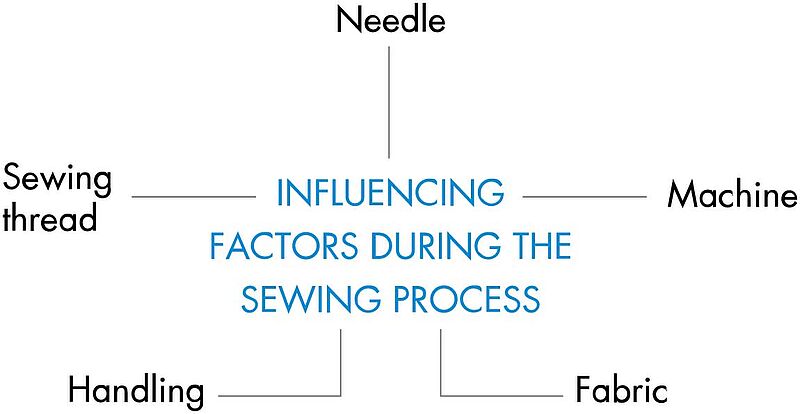
A visible, wavy appearance on one or both sides of the seam is rarely desirable. Seam puckering is one of the most common processing problems in garment manufacturing. It can occur immediately after sewing, during ironing or pressing, or only after a short rest period along the seam or in certain areas of the seam. In practice, puckering is assessed visually and evaluated using a photo scale.

Seam marks
Seam marks visible on the outside are a well-known processing problem with fine fabrics. They occur when the seam allowances and/or sewing threads leave marks when the closing and serging seams are ironed.
Poor coordination of sewing thread and fabric
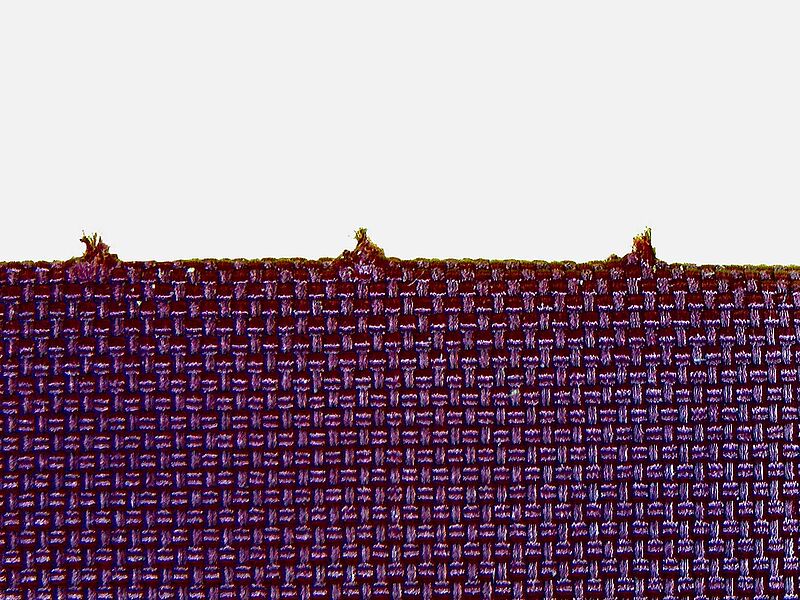
Sewing thread construction and ticket number often do not ideally emphasise the character of the fabrics and designs. If the sewing thread, needle size and fabric are not optimally matched, material damage can occur, for example, due to the use of needles that are too coarse. This damage usually only becomes visible after the first wash, when the fabric threads along the seam are brushed up.
Incorrect thread balance
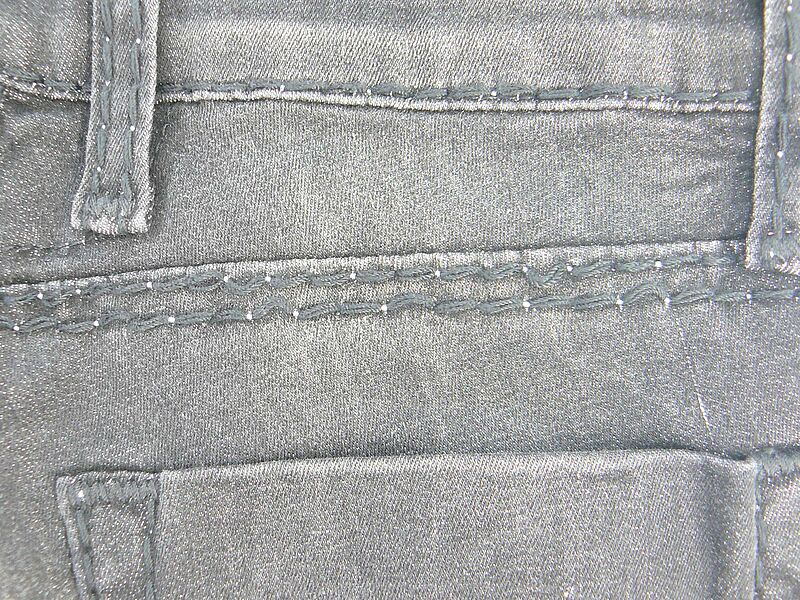
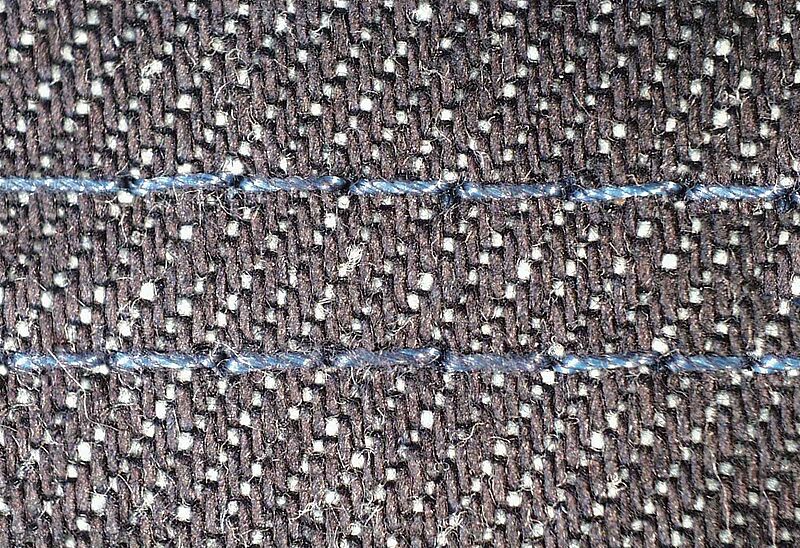
As soon as the thread balance deviates from the ideal, an uneven seam pattern results, which is generally unacceptable for visible seams. The following illustration shows the appearance of a poor thread balance in a double lockstitch seam.
Poor colour matching
Unwanted colour differences in tone-on-tone stitching are easy to spot. This problem is less noticeable with contrasting coloured seams.
The following is important for achieving the optimum colour match between sewing thread and fabric:
- Colour matching, taking into account the metamerism effect
- Comparison of colour fastness between fabric, sewing thread and other materials
- Use of trained personnel with a keen sense of colour
Seam grinning
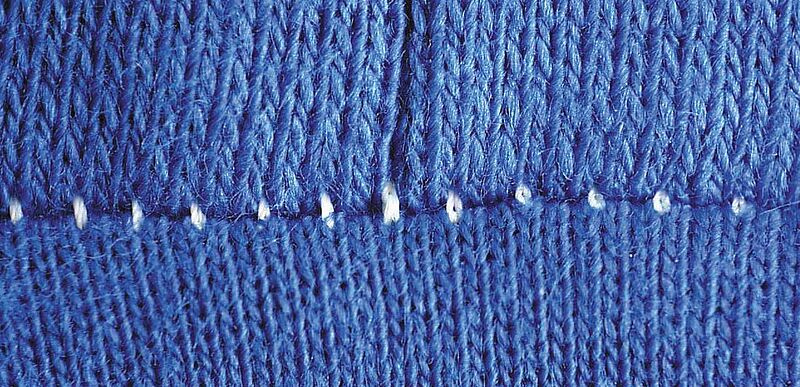
Even to the untrained eye, so-called grinning or protruding seams indicate that something is wrong with the processing. This mainly affects joining seams that are subject to heavy wear, such as seat seams. When a seam grins, the stitching between the two seam edges becomes visible.
When tension is applied across the direction of the seam, the sewing threads appear in the form of a ladder. Possible causes include poor thread balance, thread tension that is too loose or insufficient stitch density.
Conclusion
Seam appearance has a major impact on the perceived quality of a sewn product. A well-balanced combination of sewing thread, fabric, needle and sewing parameters helps prevent visible defects and ensures a clean, high-quality seam.
Quick facts
| Property | Value |
|---|---|
| Category | Seam quality |
| Main purpose | Achieve an attractive and consistent seam |
| Influences | Thread, stitch type, tension, needle, sewing parameters |
| Typical applications | Visual inspection |
| Related topics | Seam puckering, skipped stitches, seam quality |
Also known as
Technical terms
- Seam appearance
- Seam aesthetics
- Visual seam quality
- Seam finish
Common descriptions
People often search for:
- Good-looking seam
- Beautiful seam
- Straight seam
- Clean seam
- Professional seam
- Uneven seam
- Wavy seam
- Poor seam appearance
- Decorative seam
- Nice stitching
Alternative terminology
- Seam aesthetics
- Visual appearance
- Appearance quality
International terminology
| Language | Common terminology |
|---|---|
| English | Seam haptics, Seam feel, Seam comfort, Soft seam |
| German | Naht-Haptik, Griff der Naht, Tragekomfort |
| French | Toucher de la couture, Confort de la couture |
| Italian | Tatto della cucitura, Comfort della cucitura |
| Spanish | Tacto de la costura, Comodidad de la costura |
| Chinese | 接缝手感, 接缝舒适性 |
| Vietnamese | Cảm giác đường may, Độ thoải mái của đường may |
FAQ
-
Seam appearance refers to the visual quality of a seam and is assessed subjectively.
-
Visible seams influence the perceived product quality. Irregularities are immediately noticeable.
-
Seam puckering is a wavy or wrinkled appearance along the seam line.
-
It may appear directly after sewing, during pressing or after a resting period.
-
It is assessed visually, often using photographic comparison scales.
-
Seam marks are visible impressions on fine fabrics caused by seam allowances or sewing threads during pressing.
-
Poor coordination between sewing thread, needle size and fabric can damage material, sometimes visible only after washing.
-
Incorrect thread balance leads to an uneven seam pattern and visible irregularities.
-
It refers to visible colour deviations between sewing thread and fabric, especially in tone-on-tone applications.
-
Seam grinning occurs when stitches become visible between seam edges under transverse tension.
-
Common causes are poor thread balance, low thread tension or insufficient stitch density.