
Intro
How a product is designed has a decisive influence on what can happen to it later. In the context of Smart Stitch and our collaboration with Resortecs, Design for Disassembly plays a key role: it helps keep different options open throughout a product’s lifecycle.
The following ten facts explain why disassembly needs to be considered from the very beginning—and how even small design decisions can affect repair, recovery, reuse and recycling.
10 Facts
1. Circularity starts at the design stage.
The ability to repair, refurbish, recover or recycle a product is largely determined before it is even manufactured.
2. Most products are not designed to come apart.
Many garments contain multiple materials, trims and components permanently stitched together, making separation difficult and costly.
3. Circularity is not limited to recycling
Design for Disassembly supports multiple value recovery pathways, including repair, refurbishment, delabeling, material recovery and recycling. Products should be designed to keep options open.
4. Recycling should be the last option, not the first.
The way materials and components are assembled directly influences how easily they can be separated later. Keeping products and materials in use for longer generally preserves more value than immediately recycling them.

5. Disassembly enables higher-value recovery.
Separating components without damaging surrounding materials helps preserve their value for future use. Labels, trims, zippers, premium fillings and branded accessories can often be recovered and reused when products are designed accordingly.
6. Manual disassembly limits circularity at scale.
Taking products apart by hand is slow, expensive and difficult to scale across industrial volumes. Design-for-Disassembly helps circularity scale.
7. Small design changes can create significant operational benefits.
Minor modifications during product development can significantly improve downstream repair and recovery operations and improve end-of-life processing without affecting appearance or performance during use.
8. Regulations are accelerating Design for Disassembly.
New European legislation is placing greater emphasis on durability, repairability and recyclability.
9. Design for Disassembly supports business resilience.
Recovering products and materials can reduce waste, lower costs and create new value streams from returns and unsold inventory. Components can only be recovered efficiently if they can be separated without damaging the product.
10. Circular products keep options open.
The goal is not to predict a product's next life, but to ensure that multiple pathways remain possible throughout its lifecycle.
Designing today with tomorrow in mind
Together, these ten facts show that Design for Disassembly is not only about what happens at the end of a product’s life. It begins with the choices made during development and assembly.
By keeping products easier to separate, designers and manufacturers can help maintain multiple pathways for products, materials and components—from repair and refurbishment to recovery, reuse and, as a final option, recycling. The central idea is simple: circular products should keep options open.
Frequently Asked Questions
What is Smart Stitch™, and where can it be used?
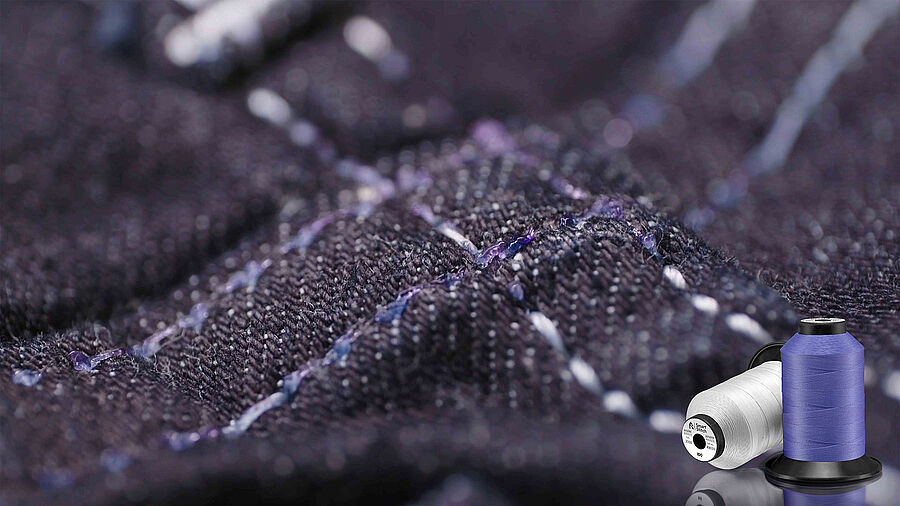
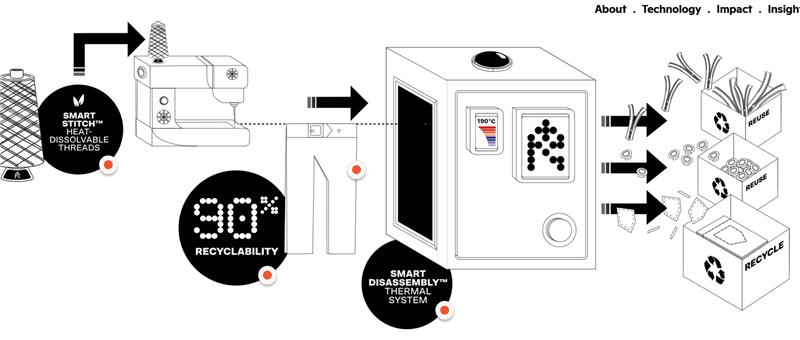
Smart Stitch™ is a heat-activated sewing thread that behaves like conventional thread during a product’s use phase, while enabling controlled disassembly under specific industrial conditions. It is suitable for applications in ladieswear, menswear, workwear, sportswear, embroidery, and home interiors, supporting operations such as repair, component replacement, delabeling, material recovery, and industrial recycling.
What is Smart Disassembly™?
Smart Disassembly™ is Resortecs' thermal disassembly technology that works with Smart Stitch™ to separate components quickly and efficiently.
Does Smart Stitch™ affect garment performance?
No. Smart Stitch™ is designed to perform like a conventional industrial sewing thread during the product's intended use, maintaining durability, appearance and manufacturing compatibility. Disassembly only occurs under controlled industrial conditions using the appropriate Smart Disassembly™ process.
Why is Design for Disassembly becoming important?
As regulations evolve and businesses seek more circular operations, products need to stay valuable beyond their first use. Design for Disassembly enables brands and manufacturers to keep more options open throughout a product's lifecycle, making repair, refurbishment, material recovery and recycling significantly more efficient.
How does Smart Disassembly™ work?
Smart Disassembly™ uses controlled thermal processing to deactivate Smart Stitch™, allowing textile components to be separated efficiently while preserving the quality of surrounding materials.