
Intro
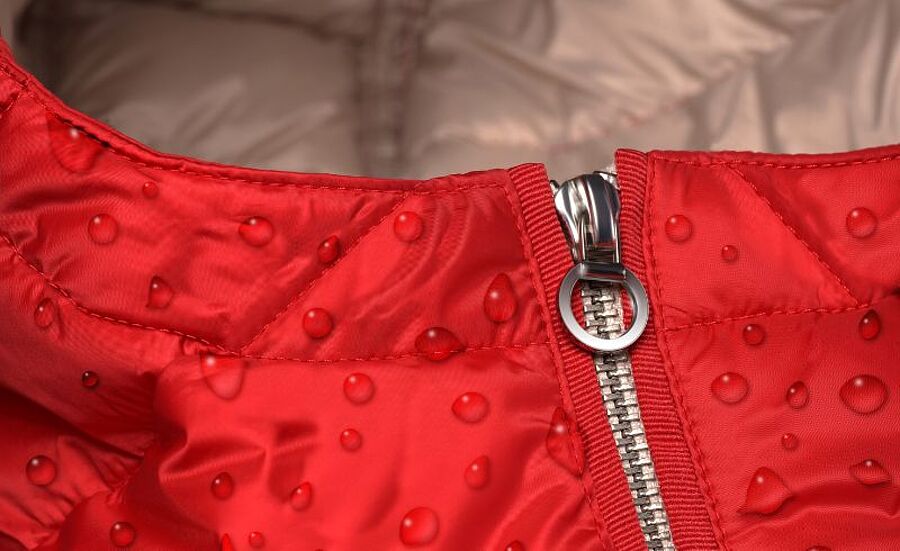
When feathers or quills leak out of down jackets, this is referred to as down leakage. The end customer usually only notices this problem after some time has passed. However, the causes of down leakage usually arise during the production of the down garment.
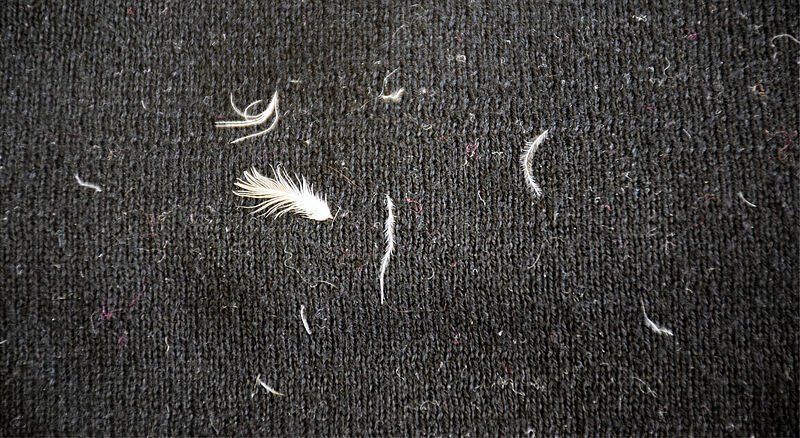
The term ‘down jacket’ suggests that this type of jacket is always filled exclusively with down. However, for cost reasons, feathers or down fragments are often mixed in with the high-quality down. These three filling materials are listed below.
| Definition | Structure | Leakage | |
|---|---|---|---|
| Down | The down looks like a fine snowflake. It is a three-dimensional construct. The soft-as-silk down barbs with most delicate ramifications radially grow out of the almost invisible core and can trap a lot of air. One single down weighs only around 0.001 to 0.002 g. One kilo comprises around a half to one million down. Down are the undercoating of the water fowl, that means geese or ducks. Land fowl, such as turkeys or chicken do not have any down. Down are growing beneath the covering plumage and can be found most often in the breast zone. | 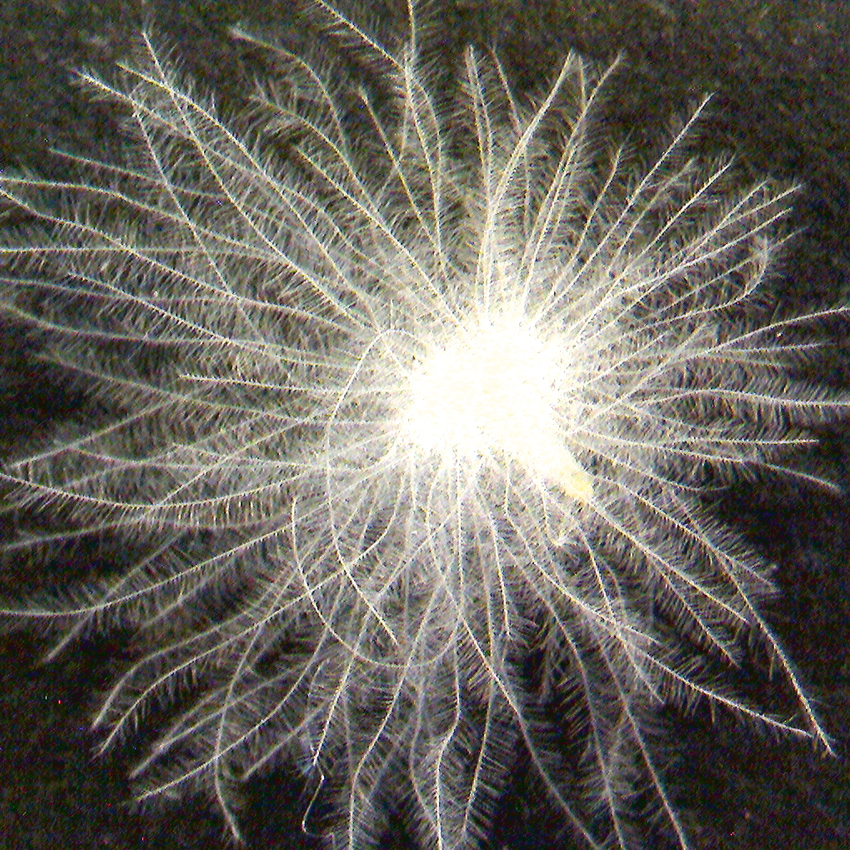 | No leakage with high-quality down |
| Feather | The feather forms the outer main protection of the animal's body (horny integument). It is flat and has a two-dimensional shape. The feather has fine barbules growing from the continuous quill on both sides. | 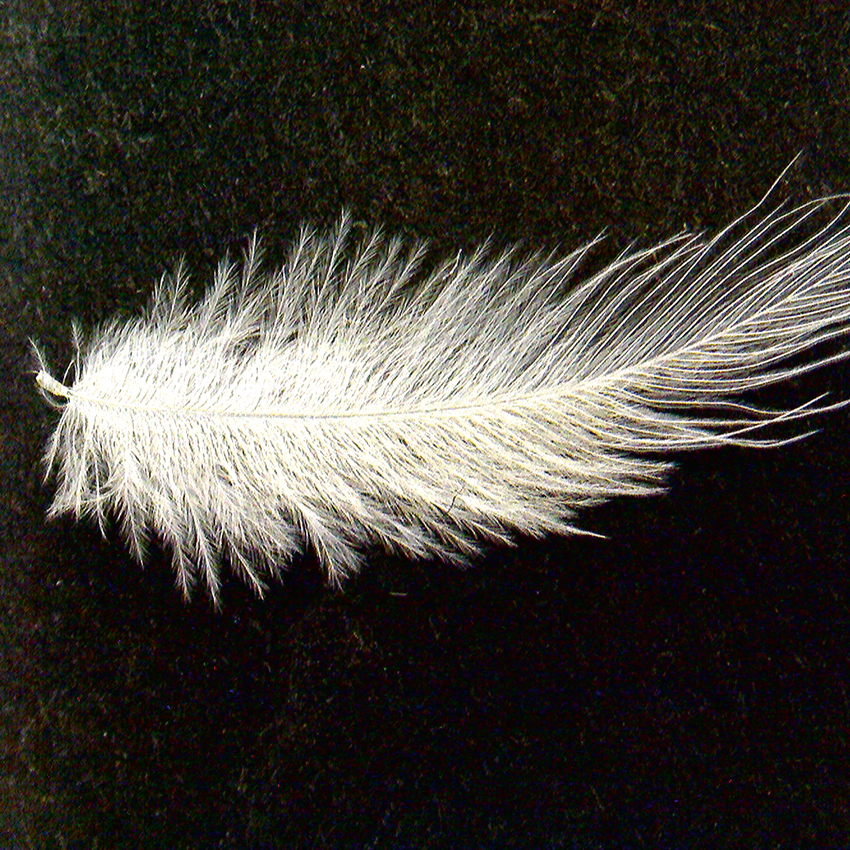 | 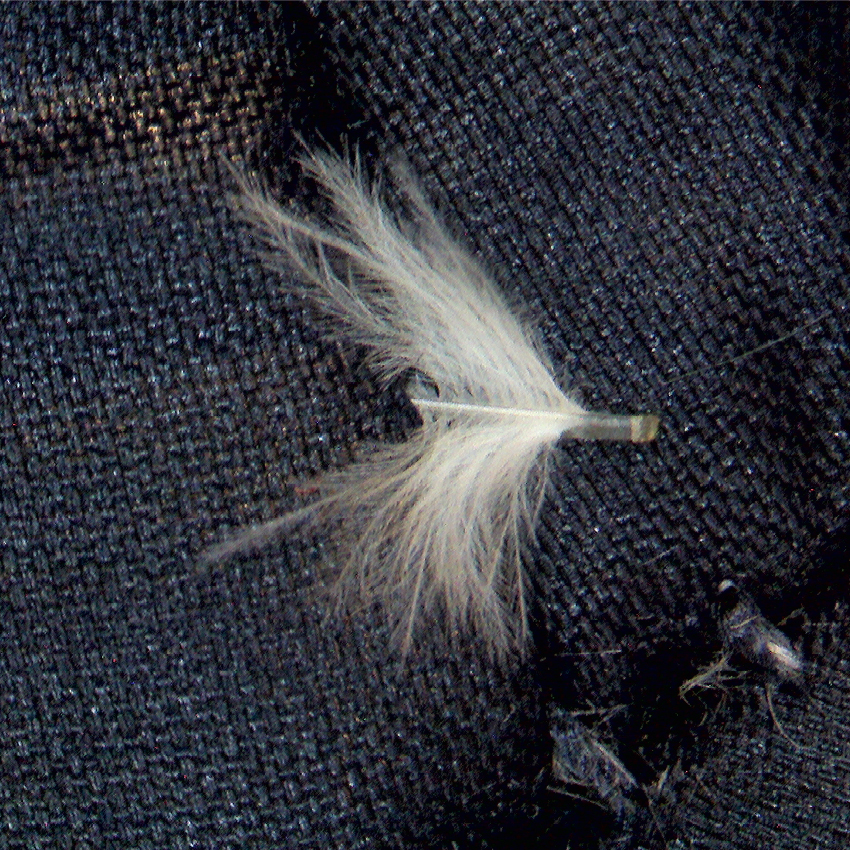 |
| Broken down | Feather pieces or down fibres (“down barbs“) that are broken off. | 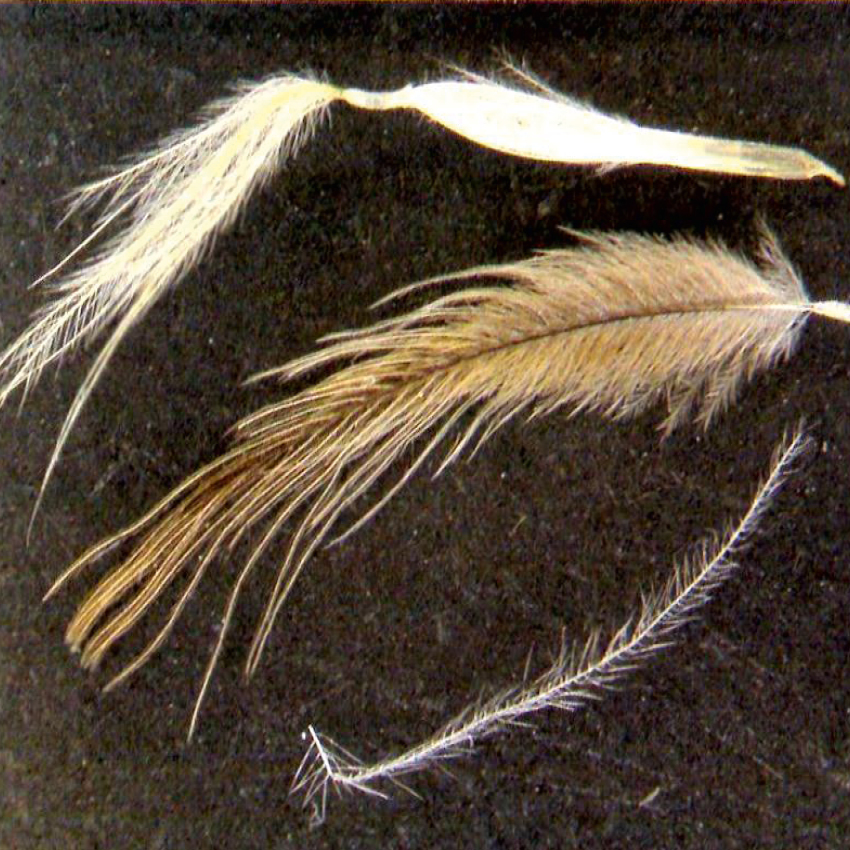 | 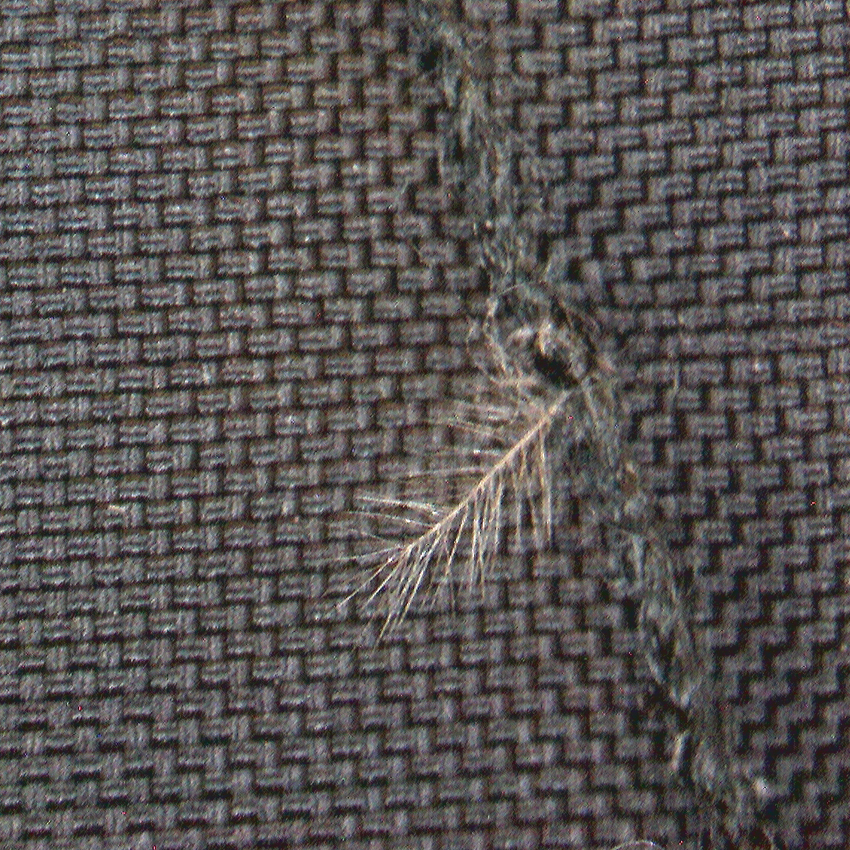 |
Causes of down leakage
Down leakage is a common problem with down jackets, yet it can easily be prevented. This requires a close examination of the potential causes of down leakage: the outer fabric, the filling and the manufacturing process.
The outer fabric itself can be a major cause of down leakage. If the fabric used is not down-proof, the down will escape through the fabric and become visible on the outside of the jacket.
Another important factor is the quality of the filling. As already mentioned, there is a significant difference between down, feathers and feather fragments. These products differ markedly in their heat retention, weight and, above all, their tendency to escape from the garment. Whilst down, simply because of its three-dimensional structure, does not escape so easily from a seam or fabric, feathers, with their quills, pierce through the material much more easily. Feather fragments, on the other hand, penetrate the fabric most quickly due to their small size.
Another major cause of down leakage lies in the manufacturing process. If the stitching is not done neatly, or if the wrong thread is used, the thread may pull the down out through the stitch holes during the stitching process. However, down leakage can also occur over time. For example, repeated wear and washing can cause the down to slip through the stitch holes.
Whatever the cause, down leakage is always a nuisance, particularly as it is preventable. If the outer fabric is the cause of the down leakage, it is advisable to consider other potential fabric types. For example, there are materials that are specifically manufactured to meet the specific requirements of down. These are woven very tightly to prevent the down and feathers from escaping easily from the fabric. To make a garment completely down-proof, it is also possible to use special interlining materials (woven or non-woven).
But beware: tests carried out by an independent testing institute have shown that, unfortunately, one should not rely on materials labelled as ‘down-proof’. In a test procedure in which the down and feather resistance of six fabrics was assessed in accordance with DIN EN 12131-1, it emerged that only one of the six fabrics tested was actually effective. The fabric’s static properties can also influence the behaviour of the down. When down penetrates the fabric, it either sticks there or falls off. It is more noticeable when the down quills get stuck in the material as a result of static charge.
It is strongly recommended that you always test the fabric in question for down leakage.
If down leakage is caused by down being pulled out through the sewing thread, it is advisable to examine the sewing thread used and the associated sewing parameters.
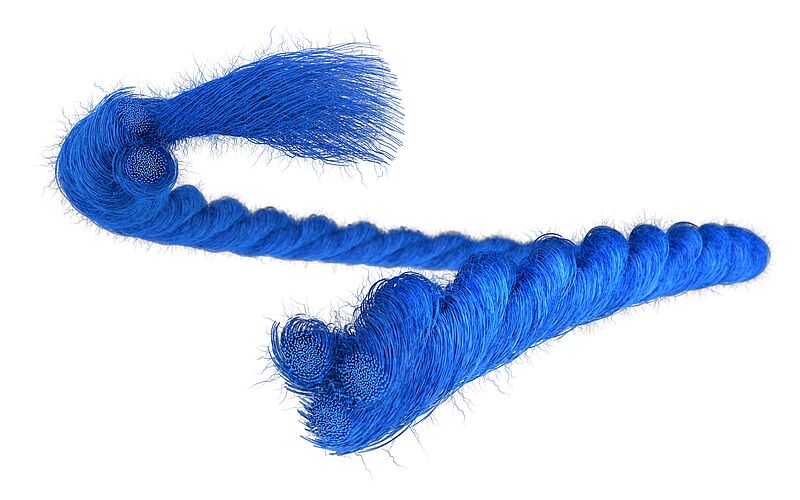
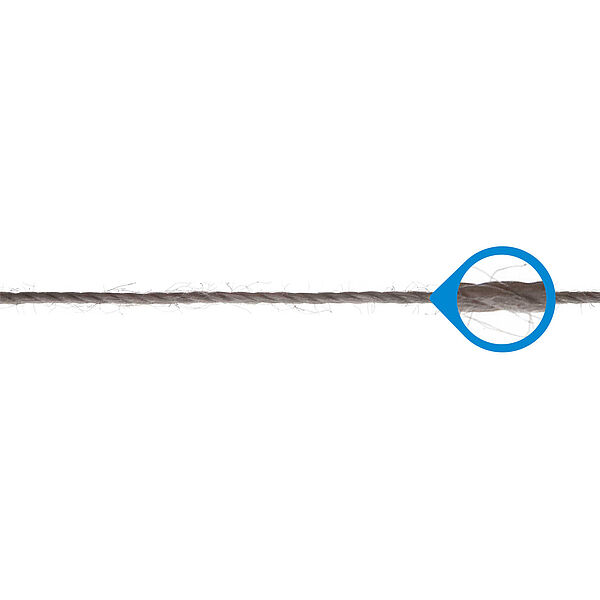
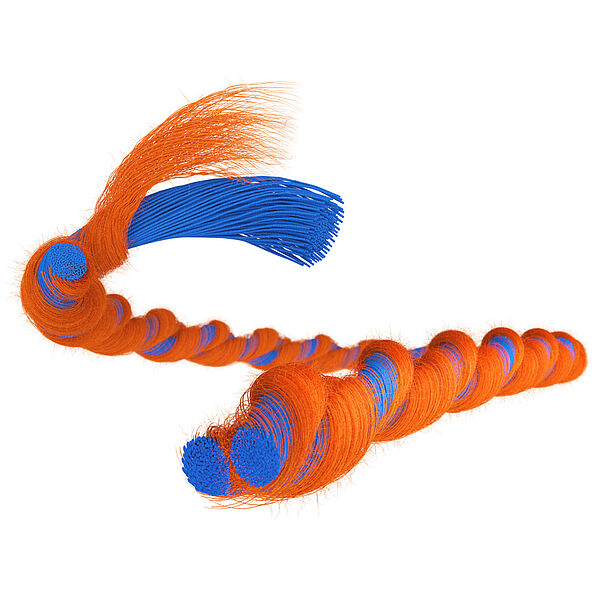
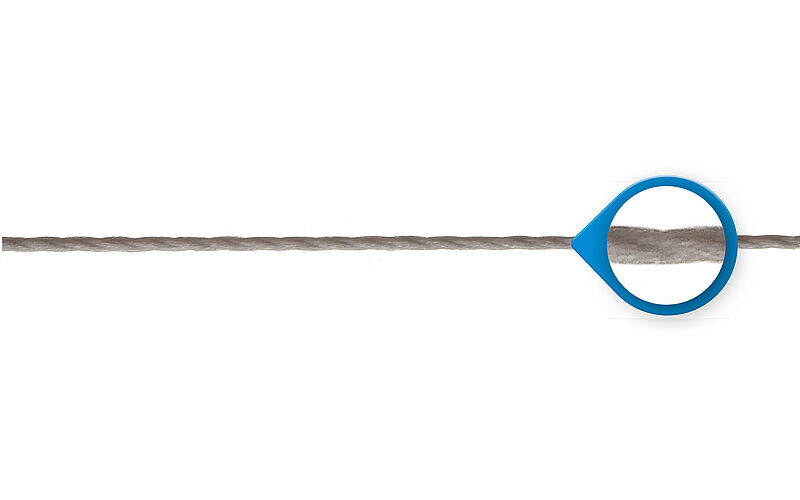
Spun yarns (100% staple fibres) have a hairy and rough surface. As a result, down and feathers can easily become caught in the sewing thread and be pulled through the stitch hole. The same applies to core spun yarns (approx. 65–70% continuous filament & approx. 30–35% staple fibres). Continuous filaments such as Serafil fine 180 are best suited for working with down. Thanks to their smooth and even surface structure, they are ideal and reduce the likelihood of down being pulled out of the fabric by the sewing thread during the sewing process.
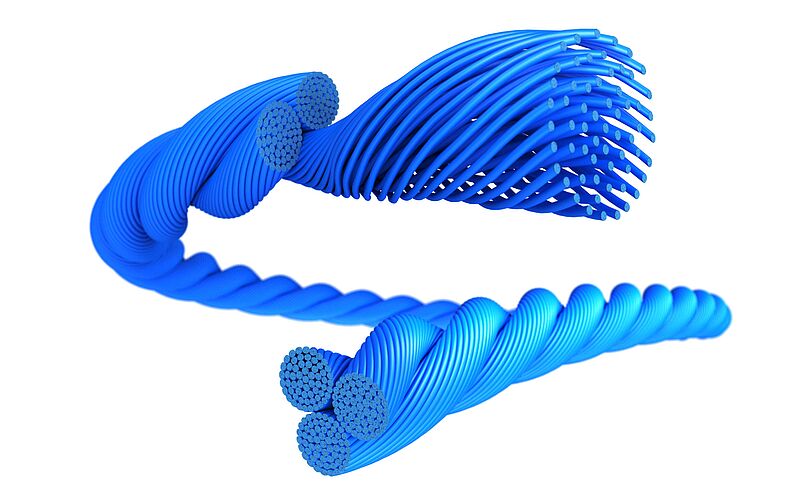
Visual representation of various sewing thread constructions and qualities
Spun (100% staple fibres)
Characteristic: Hairy and rough surface
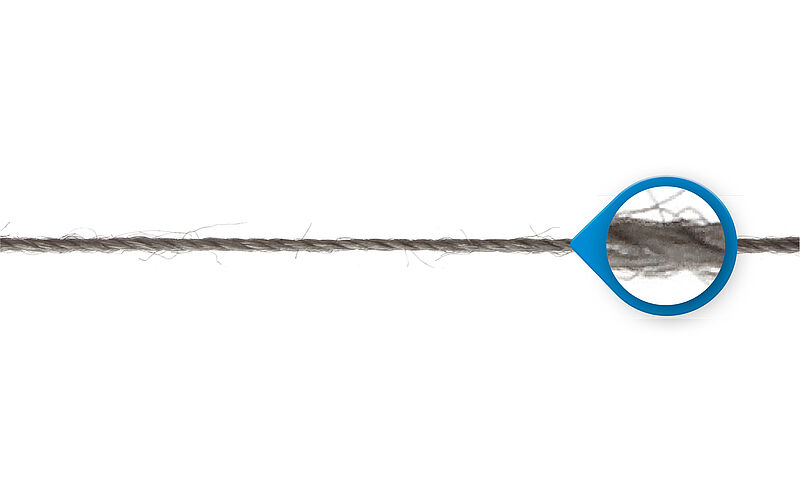
Core spun, e.g. Saba 150 (approx. 65–60% Continuous filament and approx. 30–35% staple fibres)
Characteristic: Slightly rough surface
Continuous filament, e.g. Serafil fine 180 (100% continuous filament)
Characteristic: Smooth and even surface


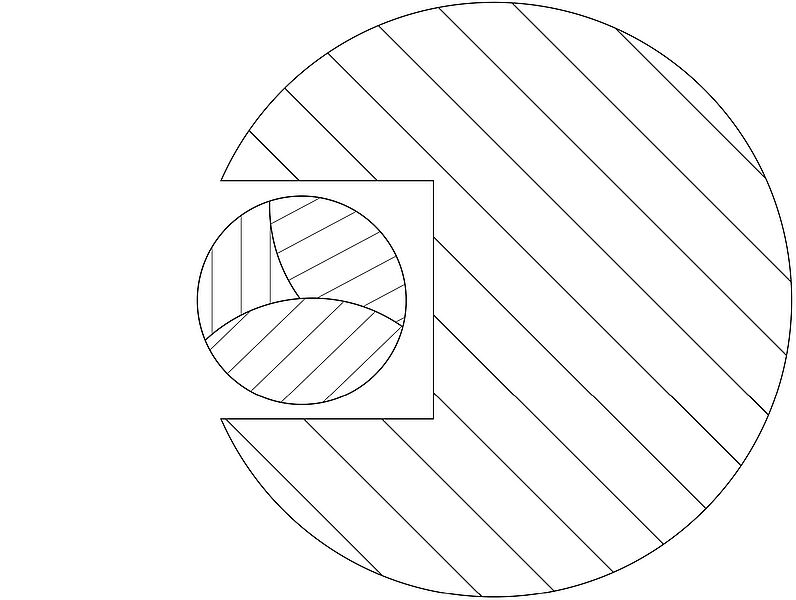
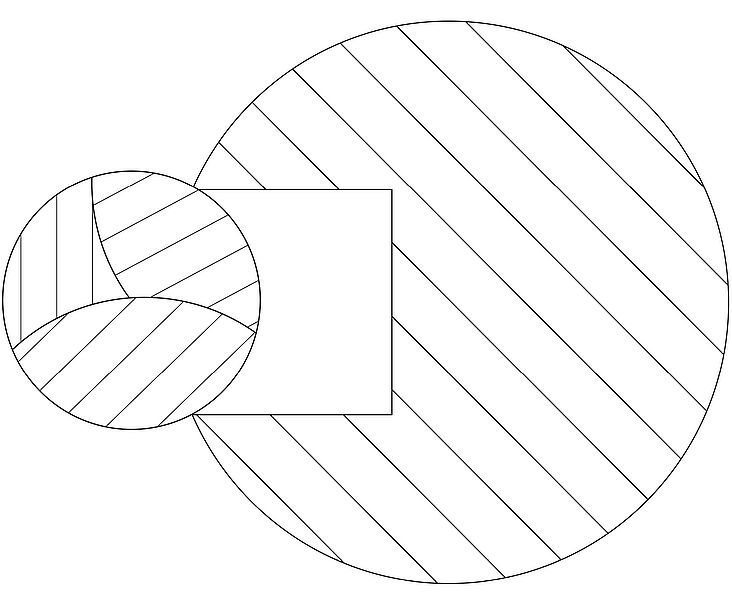
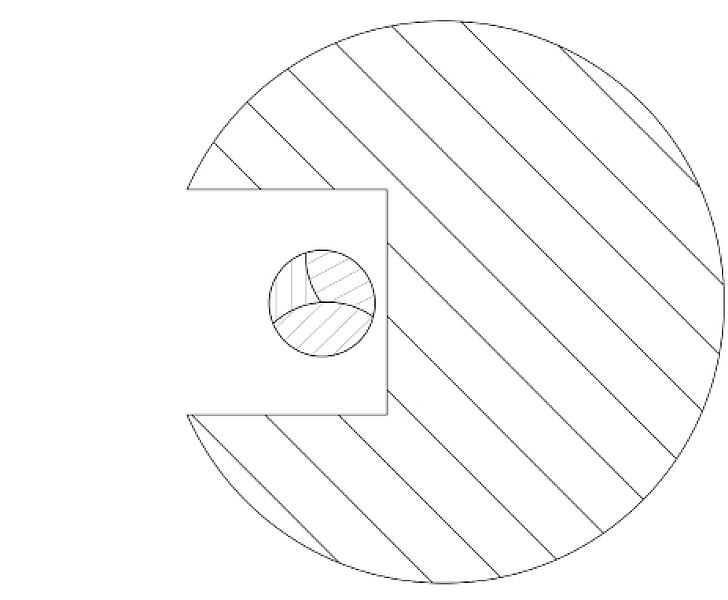
In this context, the choice of needle size is also important. As a general rule, the needle size should be matched to the thread thickness, as shown in the diagram below.
Matching needle size to thread size
Ideal:
Minimal strain on the thread. The thread fits snugly in the eye of the needle.
⇒ Ideal processing
Caution:
Thread too thick, needle too small.
⇒ Thread breakage
Warning:
Thread too thin, needle too large.
⇒ Skipped stitches and thread breakage
The larger the needle used, the larger the stitch hole. Even though the stitch holes are ‘sealed’ or closed by the sewing thread, they can still – depending on the nature of the fabric – be pushed open or come apart due to movement whilst wearing the garment or during washing. It is therefore advisable to use the smallest needles possible.

Summary of the key recommendations for action
- The fabric used must be tested for down leakage. The test procedure specified in DIN EN 12132-1 is recommended for this purpose.
- A high-quality down filling with a high proportion of down and a low proportion of feathers and feather fragments reduces the likelihood of down leakage.
- Using the right sewing thread is crucial. We therefore recommend using high-quality multifilament threads such as Serafil fine 180 (for both the bobbin and needle threads).
- During the sewing process, small needles should be used in particular (e.g. Nm 60/ size 8, needle tip: R, RS, SPI) to avoid large stitch holes. The rule of thumb is: the smaller, the better.
FAQ
-
Down leakage can be caused by the outer fabric, the filling material, or the manufacturing process. In many cases, feathers or feather fragments escape through the fabric or stitch holes over time. Poor material selection and unsuitable sewing parameters can significantly increase the risk of leakage.
-
Feathers contain a rigid quill that can pierce fabric more easily than down. Feather fragments are even more likely to penetrate the material due to their small size. The higher the proportion of feathers and feather fragments in the filling, the greater the risk of leakage.
-
Yes. If the outer fabric is not sufficiently down-proof, filling materials can escape through the fabric structure. Testing fabrics for down leakage resistance is therefore essential before production begins.
-
Yes. Sewing threads with a hairy or rough surface can catch down and feathers and pull them through the stitch holes during sewing. Smooth continuous filament threads help reduce this risk significantly.
-
Continuous filament sewing threads are particularly suitable for down applications because of their smooth and even surface. They reduce the likelihood of down being pulled through the fabric during sewing. High-quality multifilament threads are therefore often preferred for down garments.
-
Larger needles create larger stitch holes, increasing the risk of filling material escaping through the seam. Smaller needles help minimize hole size and improve seam integrity. As a general rule, the smallest suitable needle should be used.
-
The needle size should always match the sewing thread thickness while remaining as small as possible. Fine needle sizes help reduce stitch hole dimensions and lower the risk of down leakage. Proper needle-thread matching is essential for reliable processing.
-
Manufacturers should test fabrics for down resistance, use high-quality down fillings, select smooth continuous filament sewing threads, and work with fine needle sizes. Combining these measures significantly improves the performance of down garments. Preventing down leakage starts with material selection and continues throughout the entire manufacturing process.