
Intro
Expert contribution: Ehsanul Huq, Commercial Director AMANN Bangaldesh

Please note: Garment finishing requirements can vary significantly from one market to another, depending on local production structures, customer demands and the types of garments manufactured. As a result, certain sewing thread solutions are only relevant in specific markets.
This also applies to bleach wash applications, which are particularly important in markets with a strong focus on denim and jeans production, including faded, washed and used-look finishes. In Bangladesh, this type of garment production plays an important role, creating specific requirements for sewing threads used in bleach-wash processes. For this reason, Bleachfast is a market-specific solution with particular relevance for Bangladesh.
What is bleach wash?
Bleach wash is an important garment washing process used to create a faded, lighter, vintage or worn-out appearance on garments. It is widely used in denim and cotton garments to remove or reduce colour from the fabric surface.
In denim, bleach wash breaks down the indigo dye and gives the garment a washed-down look. The final appearance depends on several factors, including:
- fabric type
- dye
- bleaching chemical
- washing time
- temperature
- pH
- machine load
- process control
Bleaching agents used in garment washing
The common bleaching agents used in garment washing are sodium hypochlorite, hydrogen peroxide, potassium permanganate and, in some cases, calcium hypochlorite.
Sodium hypochlorite is widely used for strong bleaching effects, especially in denim. Hydrogen peroxide is milder and is often used for controlled bleaching or whitening. Potassium permanganate is mainly used for spray effects, local fading, whiskers and special design effects.
After bleaching, neutralizing chemicals such as sodium metabisulfite or sodium bisulfite are used to stop the bleaching action and remove chemical residues from the garment.
Why is bleach wash used?
Customers prefer bleach wash because it improves the fashion value and visual appeal of garments. It helps create:
- light shades
- vintage looks
- worn-in effects
- special faded designs
Many brands use bleach wash to make garments look more casual, trendy and attractive to consumers. It is also used to add value to basic denim or cotton garments and to meet seasonal fashion requirements.
Common problems in bleach wash
Bleach wash can create quality problems if the process is not controlled properly. Common problems include:
- uneven shade
- patchy bleaching
- fabric strength loss
- yellowing
- shade variation between batches
- sewing thread damage
- metal trim corrosion
- holes
- seam failure
- harsh hand feel
- back staining
These issues usually occur because of excessive chemical use, poor neutralization, high temperatures, long processing times, machine overloading or poor chemical distribution.
Hazard factors of bleach wash
Bleach washing involves several potential hazards that need to be carefully controlled to ensure worker safety, garment quality and environmental protection.
Excessive concentrations of bleaching chemicals, improper pH, high temperatures or prolonged treatment times can cause severe damage to fabric fibres and sewing threads, resulting in loss of tensile strength, discoloration, uneven bleaching and seam failure.
Workers may also be exposed to chemical hazards through skin or eye contact or through the inhalation of irritating vapours, particularly when chlorine-based bleaching agents such as sodium hypochlorite are used.
Improper chemical mixing can create dangerous reactions and harmful gases, while inadequate ventilation can increase exposure risks.
In addition, poor neutralization may leave residual bleaching chemicals in the garment, allowing continued oxidation and deterioration of the fabric and sewing thread after washing.
Bleaching chemicals can also contribute to equipment corrosion and, if wastewater is not properly treated, create environmental pollution.
Therefore, strict control of chemical concentration, pH, temperature, processing time, neutralization, ventilation, PPE and wastewater treatment is essential for a safe and consistent bleach-washing process.
Laser wash technology is becoming more popular in modern garment washing programs. Integrating laser technology into a traditional bleach wash program replaces or reduces chemical-intensive steps like potassium permanganate (PP) spraying or heavy localized bleaching, leading to dramatic sustainability and precision benefits.
However, it introduces potential risks such as laser radiation, fumes and dust, fire hazards, and electrical risks. Proper machine guarding, ventilation, safety controls, PPE, and operator training are essential for safe operation.
Suitable sewing threads for bleach wash
For garments that will go through a bleach wash process, sewing thread selection is very important. In general, the following sewing thread types are widely used in different bleach wash programs:
- 100% polyester or polyester/polyester core spun sewing thread
- Polyester/cotton core spun sewing thread – polyester core wrapped with cotton
Polyester is widely chosen as a sewing thread for different garment wash programs. However, during bleach washing, any thread can be affected by the bleach type, bleach concentration or bleach liquor ratio used in the wash cycle.
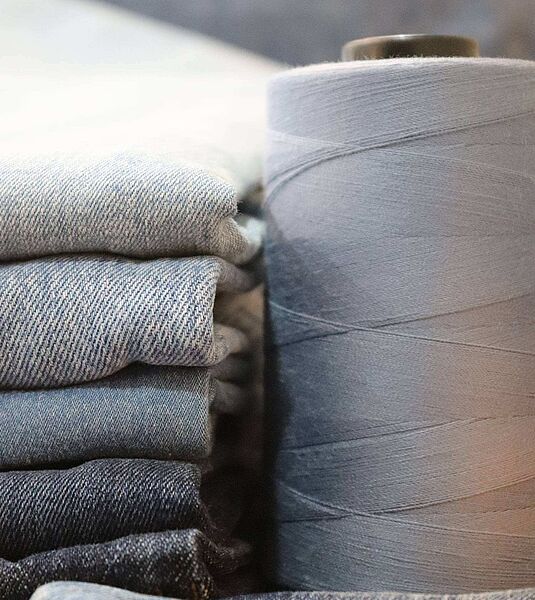
Bleach-fast sewing thread solution
Sewing threads can withstand most washing conditions in apparel washing, even in the case of aggressive stone washing with enzymes, provided that no bleach component is used.
If bleach is required in the washing process, special dyes can be applied to support the bleach wash program up to a certain level. Thread performance cannot be assured unless the washing conditions are maintained to some extent.
It is established that temperature, time, pH and chemical concentration or liquor ratio during the washing process can significantly influence the results.
It is essential that garment manufacturers confirm the sewing thread's colour fastness under the recommended bleaching conditions through a sample trial run and ensure that it meets their required standards before bulk production.
To meet fashion demands, denim garments often undergo post-make washdowns ranging from mild rinse washes to aggressive enzyme or stone washes. These processes frequently include bleaching agents — commonly sodium hypochlorite for light bleaching or calcium hypochlorite for deeper effects.
Such treatments can affect the shade of sewing threads. Under uncontrolled or severe conditions, thread performance can be negatively affected and may change beyond its standard.
In particular, seams made with 100% polyester sewing threads may show fading, metamerism or significant shade shifts, especially under high bleach concentrations or extremely high temperatures.
These threads are typically dyed with disperse dyes, which are sensitive to oxidative bleach conditions.
Even the best possible use of bleach-resistant dyes for polyester threads does not mean that the sewing thread can support any level of bleach wash during the washing process.
We recommend pre-production testing, including sample garment production and washing, to validate thread performance and appearance under the selected wash conditions.
Washdown parameters for bleach washing
For bleach washing, the following parameters should be maintained:
- Use sodium hypochlorite with 5% available chlorine at 56 g/L, at a temperature not exceeding 60°C, without added alkali.
- Maintain a pH of 11 (+/- 0.2).
- Maintain a liquor ratio of 1:50.
- Accurately dose and document bleach concentrations.
- Do not accelerate bleaching by increasing the temperature or overusing chemicals.
Conclusion
Bleach wash is a valuable finishing process in the garment industry because it creates fashionable faded and vintage effects. At the same time, it requires careful handling and strict process control.
With the right bleaching agents, a suitable sewing thread, proper neutralization and good quality monitoring, bleach wash can produce attractive garments while minimizing damage and quality problems.
FAQ
-
Bleach wash is a garment washing process used to create a lighter, faded, vintage or worn-out appearance. It is commonly used for denim and cotton garments, where bleaching chemicals reduce or remove colour from the fabric surface.
-
Common bleaching agents include sodium hypochlorite, hydrogen peroxide, potassium permanganate and, in some cases, calcium hypochlorite. The selected chemical depends on the required bleaching effect and garment design.
-
Bleach wash can affect the colour and performance of sewing thread, especially when bleach concentration, temperature, pH or processing time are too high. Possible effects include fading, shade changes, metamerism, loss of tensile strength and seam failure.
-
Common thread types used in bleach wash programs include 100% polyester or polyester/polyester core spun sewing threads and polyester/cotton core spun sewing threads. However, any sewing thread can be affected depending on the bleach type, concentration and liquor ratio.
-
Polyester sewing thread is widely used in garment washing, but bleach can still affect its shade and performance. Under severe or uncontrolled bleaching conditions, polyester threads may fade, show metamerism or experience significant shade shifts.
-
Pre-production testing helps garment manufacturers verify sewing thread colour fastness, appearance and performance under the intended bleach wash conditions before bulk production. A sample garment should be produced and washed using the selected process parameters.
-
Important parameters include bleach concentration, temperature, pH, processing time and liquor ratio. For the specified bleach wash process, sodium hypochlorite with 5% available chlorine is used at 56 g/L, with a maximum temperature of 60°C, a pH of 11 (+/- 0.2) and a liquor ratio of 1:50.
-
Common bleach wash problems include uneven shade, patchy bleaching, fabric strength loss, yellowing, batch-to-batch shade variation, sewing thread damage, metal trim corrosion, holes, seam failure, harsh hand feel and back staining.