Intro
Industrial sewing is no longer just about machine performance – reliable seam quality is the result of a well-matched system.
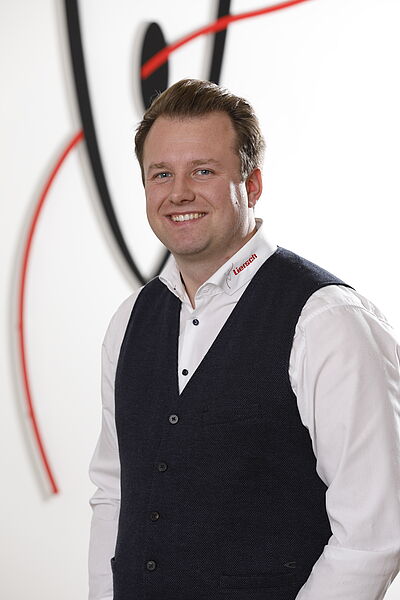
AMANN and Liersch have been working together for years, combining sewing thread expertise with machine and process know-how. In the first part of our AMANN × Liersch interview series, Marc Ewald, Managing Director, A. Liersch GmbH explains how industrial sewing has evolved and why process reliability is becoming increasingly important.
Question 1 - Industry transformation
Dear Marc, Liersch has been supporting the sewing industry for decades. How has industrial sewing changed over the years?
Liersch has been working in the textile sector since 1946, so we have seen most of that change first hand. Industrial sewing used to be a craft discipline: the result depended almost entirely on the skill of the operator and on the machine being well maintained. What has changed is not the seam itself but everything around it. Our customers today sew safety-relevant products – airbags, seat belts, lifting and lashing equipment, protective clothing – in high volumes and under full documentation requirements.
That shifts the question from "can we sew this?" to "can we prove that every single seam was produced correctly?" Automation came first, then digitalisation. Machines became programmable, then networked, and now they generate process data that feeds directly into quality management. We have followed that path from classic sewing units through fully automated systems to connected solutions such as our Thread Monitoring System. The craft is still there – but it is now supported by data.
Question 2 - System approach
Many manufacturers invest in high-quality sewing machines. Why isn't that alone enough to guarantee perfect seams?
Because a seam is a system result, not a machine result. The machine is one of at least five factors: the material, the thread, the needle, the machine setup and the operator. You can buy the best automated sewing unit on the market and still produce poor seams if the thread behaves differently from one lot to the next or if the needle geometry does not match the material.
We also see a change in what customers actually need. Ten years ago the discussion was about stitches per minute. Today it is about process reliability – a machine that runs at a slightly lower speed but delivers a documented, repeatable result is worth more than a fast machine that produces defects nobody notices. Perfect seams come from a matched system, and that is exactly why we work so closely with thread and needle specialists rather than optimising our machines in isolation.
Question 3 - Partnership value
What have you learned from working closely with a premium sewing thread manufacturer like AMANN that surprised you?
Honestly, the surprise was not a technical detail – it was the sheer performance of the organisation behind the product. Whatever we bring to AMANN, there is an answer. Every question, every case, every unusual material or failure pattern: somebody there has dealt with it before and can tell us what it means and what to do about it. That depth is not something I take for granted.
And it does not stop at the answer. AMANN comes along to customer presentations, sits in when a production problem has to be analysed, and shows concretely what can be changed and how. They are right at the current state of the art, and they are there immediately when you need someone. That combination – technical currency plus real availability – is what has surprised me most, and it is the reason the partnership works the way it does.
Question 4 - Shared expertise
Liersch and AMANN have been working together for many years. What makes this partnership valuable from your perspective?
"Many years" is an understatement. Liersch entered the textile sector in 1946, and AMANN has been part of our world essentially from that point on – close to eight decades in which both companies have changed considerably and the working relationship has not broken. That alone says something.
What makes it valuable is that we look at the same seam from two different sides and are willing to share what we see. AMANN knows what a thread does under load, under friction, at temperature. We know what a machine does with that thread at high speed and in an automated cycle. Neither view alone explains a customer problem.
And it works at the operational level: when a customer has an issue, we do not send documents back and forth, we test together. That shortens the path from symptom to cause enormously – and the customer gets one answer instead of two suppliers pointing at each other.
This interview marks the start of our first-ever content collaboration in the AMANN Knowledge Hub – and there’s more to come: stay tuned for further insights and joint content with Liersch in the coming weeks.
A. Liersch GmbH, Bad Oldesloe, has been developing and manufacturing automated sewing machines and automation solutions for technical textile processing since 1946 – from individual machines and custom machine construction to networked systems such as the Liersch Thread Monitoring System.
Find out more about Liersch: