
Intro
Estimating how small an embroidery design can be, is based on many factors. Fabric type, design style, and the combination of the two in some cases will determine if it is possible to create something that is of a smaller scale. Even with technology advances, digitizing embroidery designs is still a critical skill, especially when working with small designs that are tinier than average. A deep understanding of both the digitizing software and the physical properties of thread and fabric is needed for these types of miniature designs. They present unique challenges which require precision digitizing and creativity, to find how to make the smallest of shapes. This article explores the essential aspects of digitizing smaller than average embroidery designs and offers tips and techniques for achieving the best results. Not everything is possible, but much can be achieved if the conditions are good. When it comes to the small stuff customers need to be flexible and must be explained to why something may not work, in some case adjustment to the design can be done to create a desired result. That could be, making something a bit larger or eliminating very small details. Knowing which thread-products are available will aid in finding solutions for small embroidery sizes.
Bonnie Nielsen
Technical Advisory Services, AMANN Group
More than 40 years of experience as embroidery expert
Author of “Punch Digitizing for Embroidery Design”
Serafil fine is one of AMANN's well known products. Created for production sewing but has over the years demonstrated its value and effectiveness in the embroidery industry for smaller size designs.
It is offered in three ticket sizes or often referred to in the embroidery industry as thread weight:
Serafil fine 180
A 60-weight thread is typically used in embroidery when working on small intricate designs that require fine detail and precision. Here are specific scenarios where a 60-weight thread is ideal:
1. Small lettering: It is perfect for small text, such as lettering 4 mm to 5 mm or taller letters with very narrow bars. This thread produces finer, more defined stitches without bulkiness, which is ideal.
2. Detailed designs: When stitching intricate or delicate patterns with a lot of detail, a 60-weight thread provides a clean and crisp look. Thin Lines or borders plus narrow elements in a design, a finer thread reduces crowding of the stitches and maintains clarity.
3. Light weight polos and woven shirt fabrics: The 60-weight thread prevents puckering and maintains fabric integrity. Needle size recommendation is 65, Stitch distance used is 3.0 to 3.5 one tenth of a mm
Serafil fine 300
A 75-weight thread is an ultra-fine thread used for extremely small, detailed embroidery designs. Here are situations where a 75-weight thread is ideal:
1. Micro lettering: Perfect for very small lettering or fine text 3mm and slightly smaller where a thinner thread helps maintain legibility. Embroidered lettering in these small sizes works best when you can connect each letter without having to trim between them. There is not much room for the tie in and tie off stitches when creating these letters. The tie in are the first stitches which help pick up the bobbin thread. The tie off is to hold the stitches together so they don't unravel. If you have a large amount of text in a design, it is recommended to connect the letters instead of trimming.
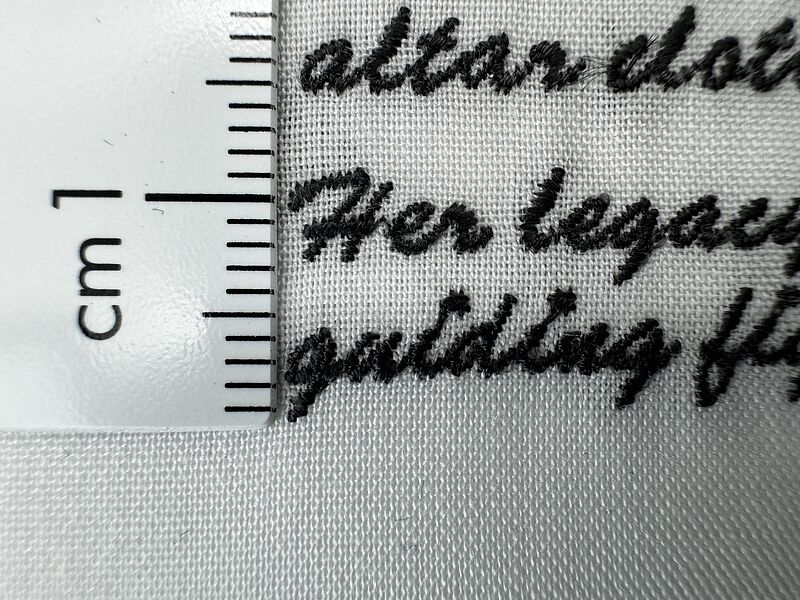
A small letter of 3mm in height can have up to 50 stitches to create one letter. When a trim is programed in between the letters, the machine stops and cuts the thread to move to the next letter. Having too many trims between the letters can be a problem because these small stitches in the beginning may not always pick up the bobbin thread. Because of the small number of stitches for each letter the machine never has a chance to get up to a proper production speed. The tinier something is, the harder it is to make the design manufacturable for large production. When doing small it is best to keep it running. If it is only a few letters spaced far apart it is workable. In some cases, trimming cannot be avoided.
2. Highly detailed designs: When working on designs that require extreme precision and detail, such as logos with intricate elements, a 75-weight thread allows for a clearer and more defined stitching.
3. Lightweight wovens: On delicate fabrics used for making dress shirts, also for the cuffs and collar, a 75-weight thread minimizes bulk and a smaller needle size prevents fabric damage. The recommended needle size is 60.
4. Miniature embroidery: Ideal for miniature designs where standard thread weights would appear too thick and overwhelm the details.
5. Multi-color shading: When blending colors in detailed shading or gradient work, the fine thread allows for smooth transitions and subtle effects.
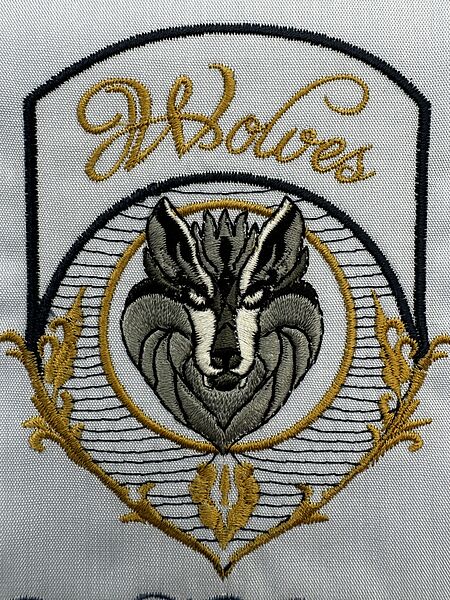
The California seal is a great example of the amount of detail that can be achieved using Serafil fine 300 = 75 weight.
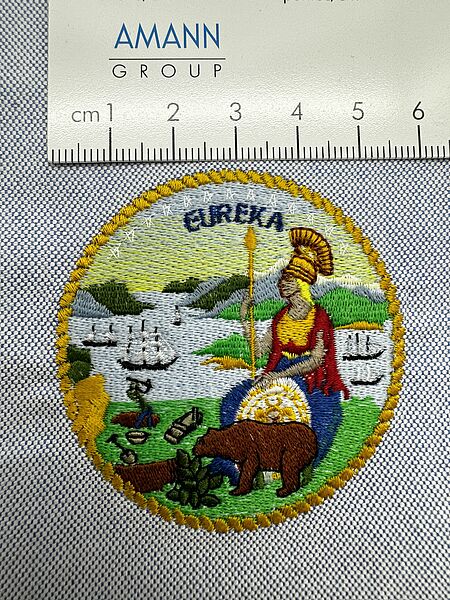
If bulking of the embroidery thread appears or is causing a problem, then decrease the number of stitches. This creates more room for the stitching and therefore increases the clarity of the embroidery. Stitch distance 2.0 to 2.5 one tenth of a mm is recommended.
Using a 75-weight thread helps create clean, detailed results on small size projects, requiring precision and a refined appearance, which a standard 40-weight could not produce.
Serafil fine 420
A 100-weight thread, being extremely fine and delicate, is used in specialized embroidery projects where precision and subtlety are crucial. Here are scenarios where you would use a 100-weight thread:
1. Ultra-Fine details: It’s ideal for highly intricate designs with very fine details that require precision, such as tiny floral patterns or miniature motifs.
2. Micro lettering: For incredibly small text, which can only be created by single stiches and should be connected between the letters.
A 100-weight thread ensures clarity without crowding the design.
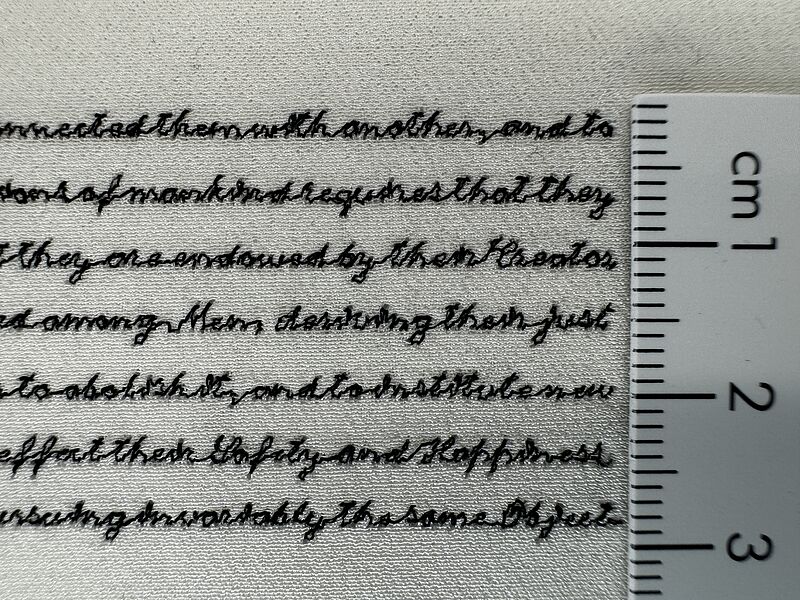
3. Delicate fabrics: On very fine or sheer fabrics like organza, chiffon, or silk, a 100-weight thread is less likely to cause puckering and will not damage the material. Needle recommendation size 55.
Using 100-weight thread allows, for extremely fine and lightweight stitching, preserving the detail and elegance in delicate embroidery work.
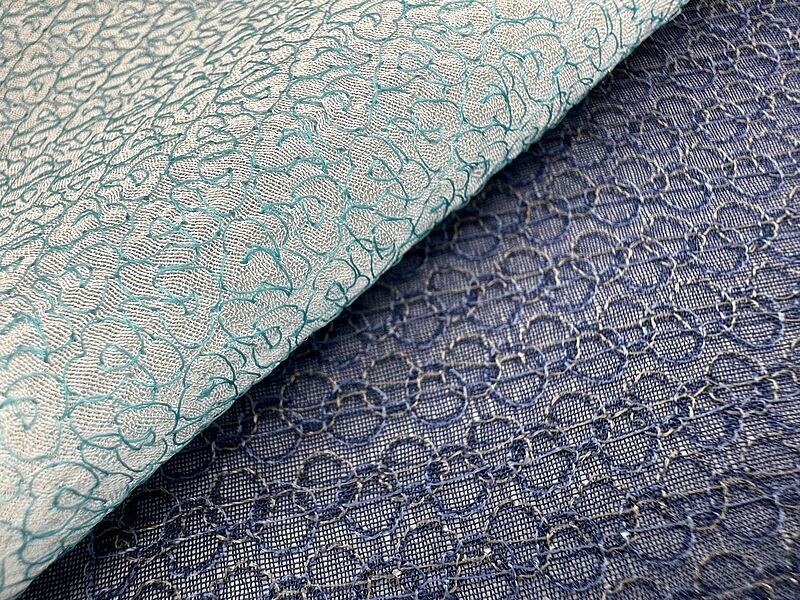
Note: The 100-weight can appear transparent because it is so thin. Be aware when embroidering with high contrast, the number of stitches needs to be increased to cover the fabric.
Stitch distance of 1.0 one tenth of a mm is recommended.
Digitizing small embroideries
When digitizing extremely small shapes, the software may not be able to generate the stitches correctly for the required size.
This is the case when manual/ single stitches must be digitized by hand, which means that each stitch must be placed so that it looks correct when embroidered.
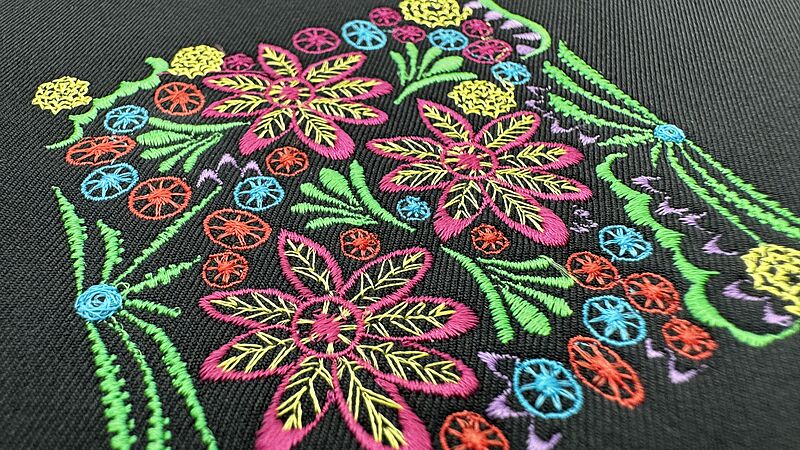
Digitizing small embroideries requires a blend of technical skill and creative vision to produce designs that do not only look nice but are running well in production. By understanding the intricacies of the digitization process and applying the best practices, you can create stunning small-scale embroidery with precision and artistry that stand out. With gained experience and confidence, digitizing small designs opens a world of possibilities, allowing you to add an intricate and personal touch to a wide range of projects.
Tips and tricks
First Trick
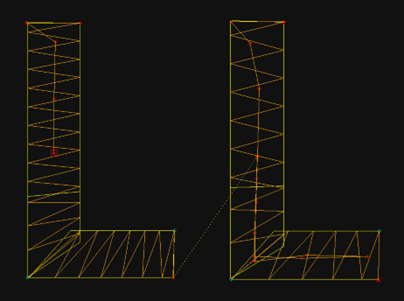
The part marked with a red circle shows a mitered corner. When digitizing small block letters mitering the corners help. The letters are so small that there is not enough space for the software to calculate the stitches so that they will become perpendicular to contour.
The underlay stitches should be in the middle of the satin stitch which helps stabilize the fabric to the backing and hold the satin stitches in place when embroidered.
Second Trick
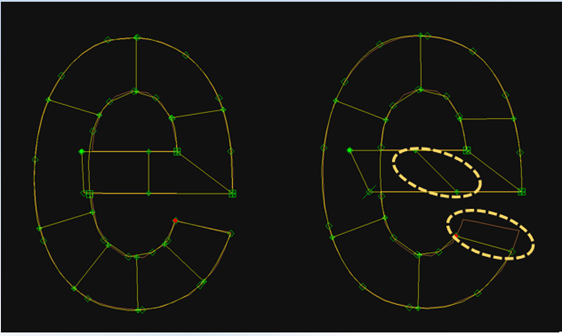
The parts marked with a dotted lines are explained below:
Third Trick
When importing the embroidery file into the machine, check to see if the cleaning for small stitches is turned off. Otherwise, it will delete the small stitches of the pattern.
Slanting the stitch direction can help open small holes like on the lower cases letter “e”. Otherwise, the holes will close.
Cutting back two stitches on the tails of letters will stop the stitching from growing into other parts of the letter where a space should be.
FAQ
-
The minimum size of an embroidery design depends on fabric type, thread selection, and design complexity. Not all designs can be scaled down without losing clarity or quality. Adjustments such as simplifying details or increasing size may be necessary.
-
Fine threads such as 60-weight, 75-weight, or 100-weight are ideal for small embroidery designs. They reduce bulk and allow for higher precision in detailed elements. The finer the thread, the better the clarity in small-scale designs.
-
A 60-weight thread is suitable for small lettering (around 4–5 mm) and detailed designs. It provides clean stitch definition without creating excessive bulk. It is also ideal for lightweight fabrics to prevent puckering.
-
A 75-weight thread is designed for very fine details and micro lettering around 3 mm or smaller. It improves stitch clarity and reduces crowding in dense designs. It is especially useful for logos and intricate patterns.
-
A 100-weight thread is used for ultra-fine details and extremely delicate fabrics such as silk or chiffon. It allows precise stitching without damaging the material. It is ideal for miniature embroidery and subtle design elements.
-
Small embroidery designs require precise digitizing and a deep understanding of thread and fabric behavior. Standard software may not generate stitches correctly at very small scales. In some cases, stitches must be placed manually to achieve accurate results.
-
High stitch density can cause thread buildup and reduce design clarity. Reducing the number of stitches creates more space and improves visual definition. Proper stitch distance is essential for maintaining detail in small designs.
-
Very small designs may cause problems such as thread trimming issues, poor stitch pickup, and unstable machine speed. Frequent trims between small elements can interrupt production efficiency. Connecting elements like lettering can help maintain consistent stitching.