Intro
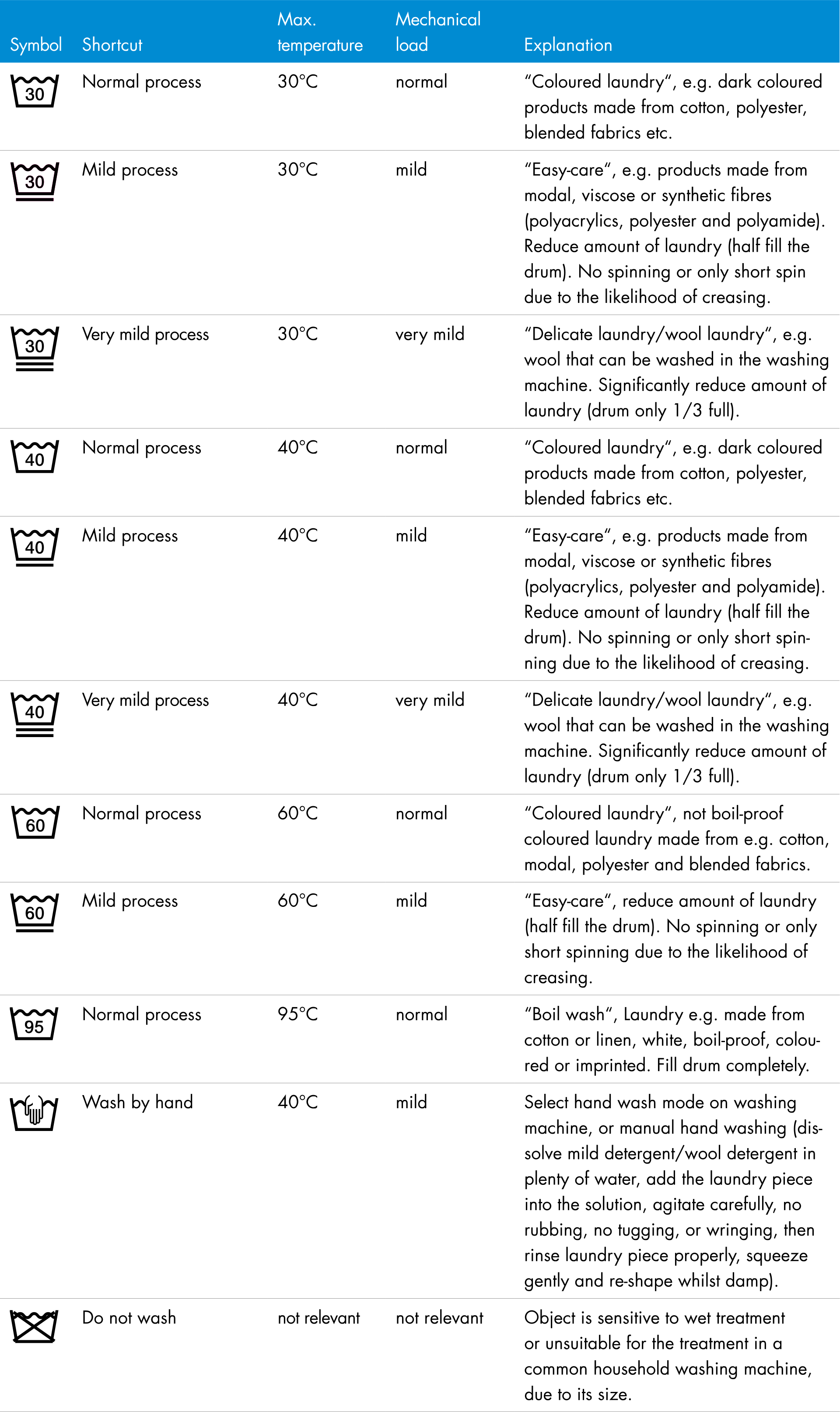
- Household laundering, hand washing, or no washing permitted.
- The figures shown in the washtub indicate the maximum washing temperature in degrees Celsius (°C).
- One or two bars beneath the washtub indicate a mild or very mild washing process with a reduced load and reduced spin speed.
- Testing is carried out in accordance with the international colour fastness standards ISO 105-C06 or ISO 105-C08.
- Colour change is assessed according to DIN EN 20105-A02, and staining (bleeding) according to DIN EN 20105-A03.
FAQ
-
The washing symbol indicates whether a textile article may be washed and specifies the maximum washing temperature. Additional bars beneath the washtub symbol indicate reduced mechanical action and gentler washing processes. The symbol helps consumers and professional laundries select the appropriate washing programme to avoid damage to the textile and its components.
-
A normal washing process allows standard mechanical action and spin speeds. A mild process reduces mechanical stress through lower drum action and reduced spinning. A very mild process is intended for particularly delicate textiles and uses significantly reduced mechanical action. The number of bars beneath the washtub symbol indicates the required level of care.
-
The maximum washing temperature indicates the highest temperature at which a textile can be safely washed without negatively affecting its appearance, colour fastness, dimensional stability or overall performance. Exceeding the recommended temperature may lead to shrinkage, colour change, seam puckering or damage to fibres and sewing threads.
-
Washing exposes sewing threads to heat, water, detergents and mechanical stress. Depending on the thread material and washing conditions, washing may influence colour fastness, dimensional stability and seam appearance. High-quality sewing threads are designed to maintain their performance under the intended care conditions.
-
Seam puckering may occur when the sewing thread and fabric shrink differently during laundering. If the sewing thread shrinks more than the fabric, the seam may contract and create a puckered appearance. Selecting compatible materials and following the recommended washing instructions helps minimise this risk.
-
Colour fastness to washing is evaluated according to internationally recognised testing standards such as ISO 105-C06 and ISO 105-C08. The assessment measures both colour change of the sewing thread and staining or bleeding onto adjacent fabrics after washing.
-
Many AMANN sewing threads are designed to perform under demanding laundering conditions, including industrial washing processes. Depending on the specific product and application, threads may also be certified according to industrial laundering standards such as DIN EN ISO 15797.
-
For demanding applications, contrasting colour combinations or special garment finishes, pre-production washing tests are strongly recommended. Testing under actual care conditions helps evaluate colour fastness, dimensional stability and seam performance before garments enter large-scale production.