
Intro
When selecting sewing threads, it is important to ensure that they are compatible with the fabric used and suitable for the intended application. The outer fabric, sewing threads, and any other trims should exhibit compatible performance characteristics during laundering and subsequent care processes.
In many countries, textile fibre content labelling is legally required, whereas care labelling remains voluntary. Nevertheless, care labels on most textile products provide guidance on the recommended washing, drying, ironing and other care procedures.
Based on the pioneering work of GINETEX (the International Association for Textile Care Labelling, headquartered in Switzerland) in the 1950s, ISO 3758 was introduced in 1994. Since then, the standard has been revised several times (the current version dates from April 2012) and has been adopted by most countries. Exceptions include the USA, Canada, Australia and South Korea (status as of March 2019). However, several of these countries are considering the adoption of ISO 3758.
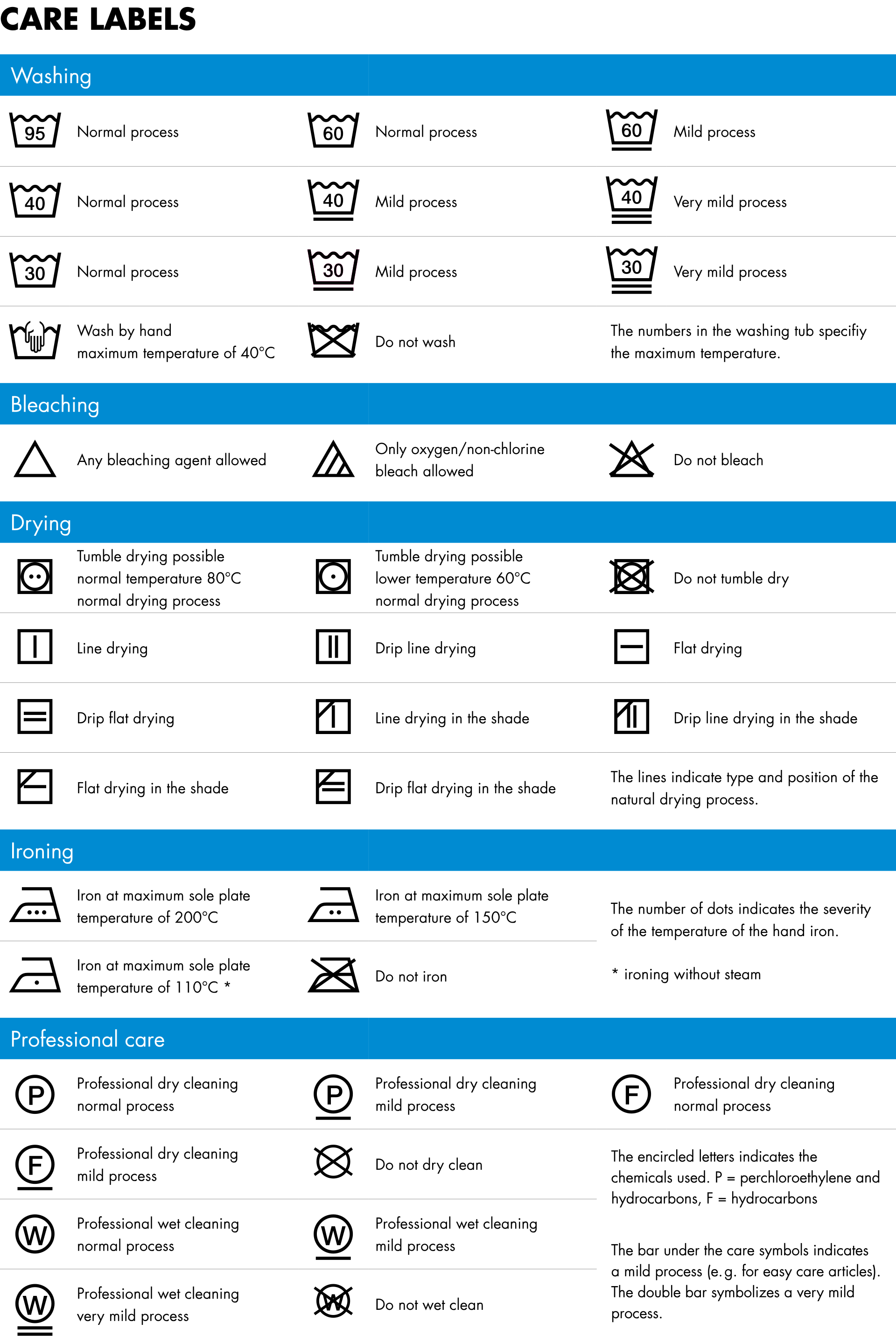
This standard specifies the procedures for washing, bleaching, drying, ironing and professional textile care by means of standardised care symbols and accompanying explanations. The symbols shown in this chapter are presented in the sequence in which care treatments are typically performed: washing, bleaching (if applicable), drying, ironing and, finally, professional textile care.
Manufacturers should permanently attach care labels in accordance with international care-labelling standards. The care symbols define the requirements that must be met by the textile product as a whole, including all materials and components used in its construction. By providing accurate care instructions, manufacturers help to ensure that no permanent damage occurs when the recommended care procedures are followed.
The relevant standards are ISO 3758 “Care Labelling Code Using Symbols” and ISO 6330 “Domestic Washing and Drying Procedures for Textile Testing”.
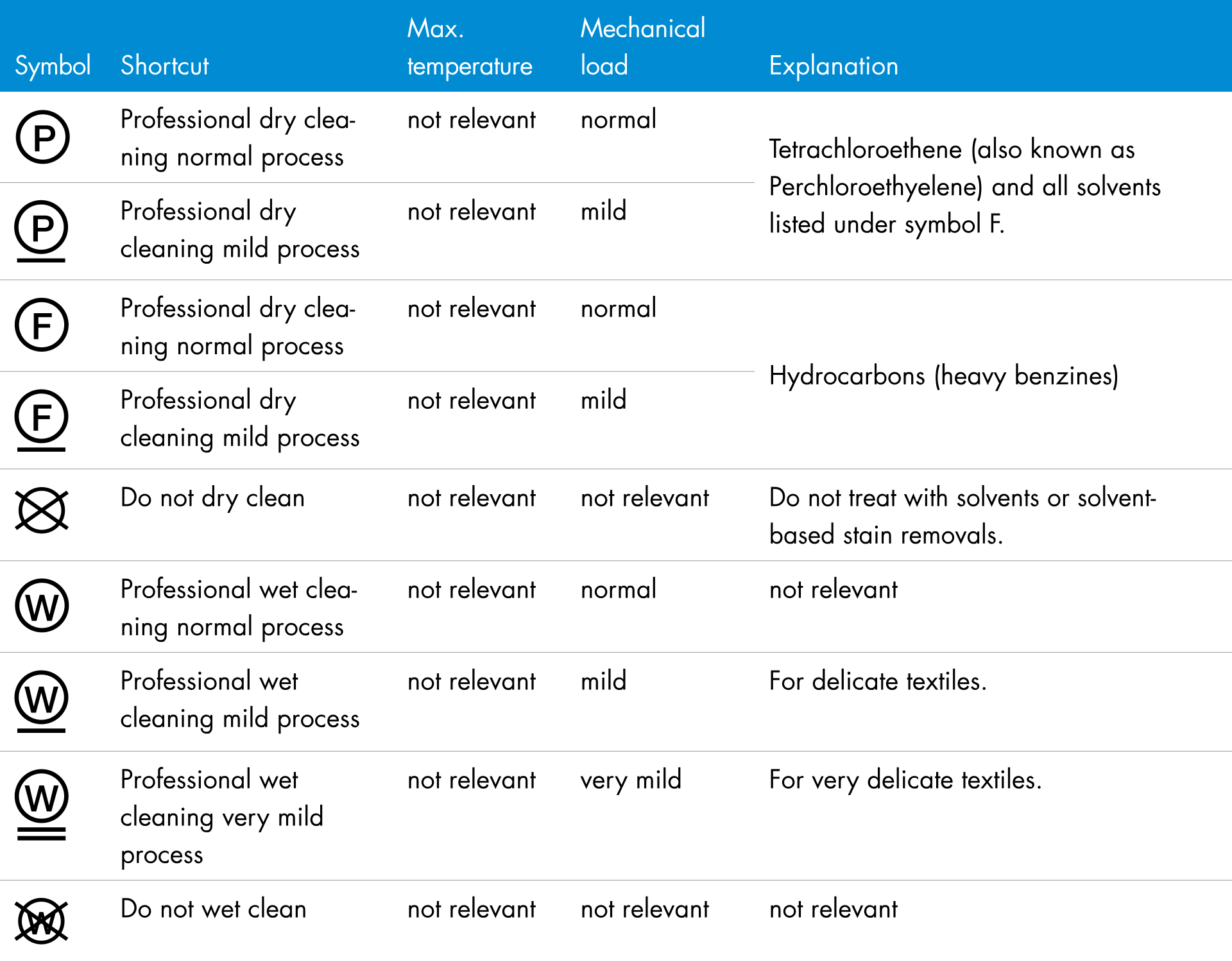
The individual care symbols and their meanings are explained in the following table. Each symbol is linked to specific international testing standards and care procedures.





Professional textile care
- Indicates whether professional textile care, wet cleaning, or dry cleaning is permitted, including specification of the applicable cleaning agents.
- Basic testing is performed in accordance with ISO 3175 and ISO 105-D01 (colour fastness to dry cleaning with perchloroethylene).
- Colour change is assessed according to DIN EN 20105-A02, and staining (bleeding) according to DIN EN 20105-A03.
- For all dry-cleaning processes, it is advisable to test a concealed area of the article beforehand.
Sewing threads are tested and evaluated in accordance with the relevant international standards. Their performance characteristics are determined by the requirements of the respective market segments. Furthermore, colour fastness properties are established through testing and published in the corresponding product data sheets following the various care treatments (see also the chapter Colour Fastness).
Changes in sewing thread colour or colour bleeding onto the surrounding fabric are typical consequences of unsuitable care treatment.
In addition to colour fastness, dimensional stability is another important performance characteristic of sewing threads due to their role in joining fabrics. If a sewing thread shrinks during washing or ironing, the seams may contract and become puckered. Similarly, excessive shrinkage of an embroidery thread may cause the entire embroidery design to shrink and lose its intended appearance.
Conversely, if the fabric shrinks more than the sewing thread, the seam appearance may also be adversely affected. It is therefore important to ensure that fabric and sewing thread exhibit similar, or at least low, shrinkage values.
Care recommendations for AMANN Products
The care recommendations for the entire AMANN product range are specified on the respective colour cards and product data sheets.
One important point should be noted: whereas care labels on garments indicate the maximum permitted washing temperature, the washing temperatures stated for AMANN products refer to the retention of colour fastness properties.
These recommendations meet market requirements and ensure optimum performance when the specified washing temperatures are observed. Depending on the raw material used, it may often be possible to wash at higher temperatures (above 60°C). This is particularly true for high-quality sewing and embroidery threads, including many AMANN products.
Features
In the fashion sector, the importance of industrial pre-washing and special garment-finishing treatments has increased significantly.
The objective of these treatments is often to achieve a specific handle, appearance, or visual effect. To prevent damage to seams and embroidery, it is essential to consider the effects of special washing procedures and finishing processes during product development.
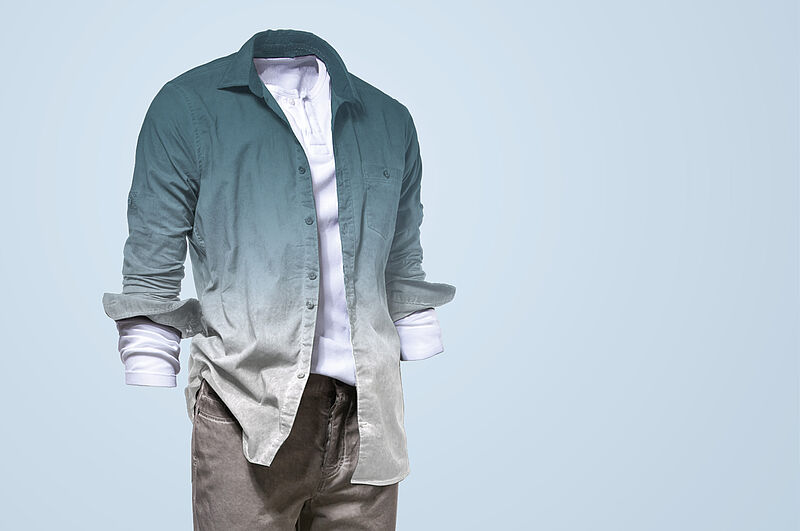
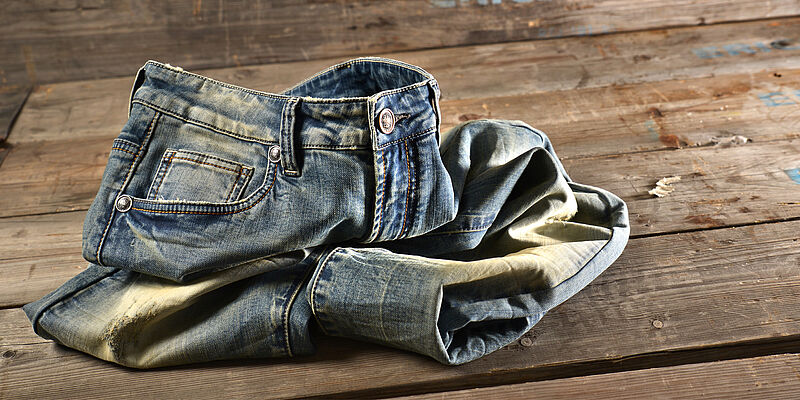
Where contrasting colours are used and garments are subjected to demanding care conditions, such as hospital laundering or workwear applications, the requirements are particularly stringent. In such cases, individual seam tests should be carried out to assess durability under the intended care conditions. The corresponding care requirements should already be taken into account during product development.
Workwear, leasingwear and corporate wear are subject to intensive use and are therefore frequently washed and dried in industrial laundering processes. Even after repeated use and laundering, these garments must remain clean while retaining their colour fastness and dimensional stability over the long term.
Consequently, the requirements for workwear with regard to industrial laundering are particularly demanding. “PRO-care”, a care label specifically developed for professional industrial laundering, helps ensure that garments can be processed under optimum conditions.
Hohenstein Laboratories have tested AMANN products intended for workwear and leasingwear applications for their resistance to industrial laundering in accordance with DIN EN ISO 15797. These products have been awarded PRO-care certification in accordance with DIN EN ISO 30023.
The following products are certified for the most common industrial laundering procedures (Processes 2 and 8), as well as for the two drying methods, tumble drying and tunnel/cabinet finishing, in accordance with DIN EN ISO 15797:
Saba, Saba Recycled, Sabatex, Sabatex Embroidery, Sabatex Recycled, Sabaflex, Serafil, Serafil Fine, Serafil Recycled, Serafil Fine Recycled Isacord Recycled, N-tech and N-tech CS.

The production of AMANN sewing threads is subject to stringent quality standards. As conditions of use and care may vary depending on the application, individual testing is recommended to evaluate colour fastness under the specific conditions of use.
FAQ
-
The sewing thread, fabric and all other garment components should have compatible care properties. During washing, drying, ironing or professional textile care, different materials may react differently to heat, moisture and mechanical stress. If the sewing thread and fabric are not compatible, problems such as seam puckering, colour changes, shrinkage or reduced garment appearance may occur. Therefore, sewing threads should always be selected according to the intended care requirements of the final product.
-
Care labels provide guidance on the recommended washing, bleaching, drying, ironing and professional textile care procedures for a textile product. They help consumers and professional laundries avoid damage and maintain the appearance, colour and performance of garments. International care labelling is largely based on ISO 3758, which standardises the care symbols used worldwide.
-
ISO 3758 is the international standard that defines the care labelling code for textiles using symbols. It specifies the symbols and instructions for washing, bleaching, drying, ironing and professional textile care. The standard helps manufacturers communicate care requirements consistently and supports the protection of textile products against inappropriate treatment.
-
Colour fastness describes the ability of a sewing thread to retain its colour during washing, bleaching, drying, ironing and professional cleaning. Insufficient colour fastness may result in colour changes or colour bleeding onto surrounding fabrics. AMANN evaluates colour fastness according to internationally recognised testing standards and publishes the corresponding values in product data sheets.
-
Dimensional stability describes the ability of a sewing thread to maintain its original dimensions during care treatments. If a sewing thread shrinks excessively during washing or ironing, seams may contract and become puckered. Conversely, if the fabric shrinks more than the sewing thread, seam appearance may also be negatively affected. Matching the shrinkage behaviour of fabric and sewing thread is therefore essential for garment quality.
-
Workwear, leasingwear and corporate wear are frequently subjected to intensive industrial laundering processes. These garments must maintain their appearance, colour fastness and dimensional stability even after repeated washing and drying cycles. As a result, sewing threads used in these applications must meet particularly demanding performance requirements and be tested according to relevant industrial laundering standards.
-
PRO-care is a care labelling system specifically developed for professional industrial laundering. It helps ensure that garments are processed under suitable industrial washing and drying conditions. Selected AMANN sewing threads have been tested by Hohenstein Laboratories and certified according to DIN EN ISO 15797 and DIN EN ISO 30023 for industrial laundering applications.
-
Yes. Although AMANN sewing threads are manufactured according to stringent quality standards, conditions of use and care can vary significantly depending on the application. For garments with contrasting colours, demanding care requirements, industrial laundering processes or special finishing treatments, individual testing is recommended to evaluate colour fastness, dimensional stability and overall seam performance under the intended conditions of use.