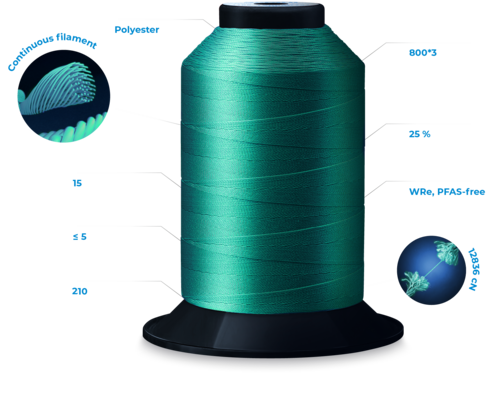
Embroidery thread materials – polyester, viscose and other fibres
Intro The choice of embroidery thread material influences not only the appearance of a design but also how reliably the thread can be processed and how the finished…

AMANN Knowledge Hub
Our Wiki provides clear, structured and reliable technical information on sewing and embroidery threads, materials, applications and performance characteristics. Explore detailed definitions, process explanations and foundational knowledge.
Intro The choice of embroidery thread material influences not only the appearance of a design but also how reliably the thread can be processed and how the finished…
Intro The colour of an embroidery thread should remain consistent throughout the intended life of the finished product. Washing, sunlight, perspiration, rubbing and…
Intro Machine embroidery is not limited to decorative applications. By using specialised threads, embroidery can provide additional technical functions, including…
Intro Decorative and special-effect embroidery threads offer possibilities beyond conventional single-colour embroidery. Metallic surfaces, changing colour sequences,…
Intro The construction of an embroidery thread has a significant influence on how it behaves during machine embroidery. Filament structure, twist and finishing affect…
Intro The size of an embroidery thread has a direct influence on the appearance and quality of machine embroidery. Fine threads allow detailed motifs and small lettering,…
Intro Colour is a universal language, but communicating it accurately is often more complex than it appears. A colour that looks vibrant on a computer screen may appear…
Intro Choosing a sewing or embroidery thread in the right colour may appear to be a simple visual task. In practice, however, visual assessment is influenced by the light…
Intro A familiar colour problem A garment, shoe or piece of furniture may look perfectly colour-coordinated in a showroom and noticeably different in daylight. Two…