

Sewing threads for bathroom textiles
Bathroom textiles combine absorbency, comfort and durability. From soft towels and bath sheets to bathrobes, washcloths and other bathroom accessories, seams must withstand frequent use, repeated washing and regular exposure to moisture while maintaining their strength, shape and appearance. The right sewing threads contribute to durable construction, soft seams and reliable performance throughout the product’s service life.
AMANN offers a range of sewing and embroidery threads for bathroom textile manufacturing. Saba is recommended as a universal sewing thread for towels and other terry towelling products. Saba 80 provides an option for voluminous, thick towelling, while Isacord 40 is recommended for decorative embroidery, such as logos and monograms on towels or bathrobes. The appropriate thread depends on the fabric properties, seam construction, decorative requirements and manufacturing conditions.
Bathroom textile manufacturing – from towels to embroidered bathrobes
AMANN sewing thread recommendation for bathroom textiles
The production of bathroom textiles requires sewing threads that provide reliable seam strength, consistent stitch formation and durable sewing performance. Towels, bathrobes and other terry towelling products are frequently washed and exposed to moisture. Their seams must therefore withstand repeated mechanical stress while maintaining a soft feel and a neat appearance.
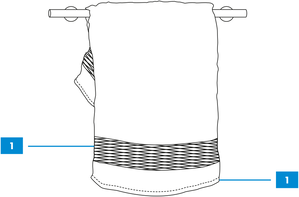
For the application shown below, AMANN recommends Saba as a universal sewing thread for towels. For topstitch seams, Saba Ticket 120 / Tex 24 is used as both needle and looper thread in combination with a 401 double chainstitch.
This stitch type is suitable for producing consistent seams on towelling fabrics. The illustrated application specifies a minimum needle size of Nm 65 / No. 9.
Depending on the fabric and processing requirements, AMANN recommends further thread options:
- Saba 80 for voluminous, thick towelling
- Isacord 40 for decorative embroidery, such as logos, lettering and monograms on towels and bathrobes
The selection of sewing or embroidery thread should take into account the fabric type, material thickness, pile structure, stitch type, stitch density and desired seam appearance. For decorative embroidery, the design, embroidery density and production conditions must also be considered.
The corresponding technical recommendation for the illustrated sewing application is provided in the table below.
| Seam no. | Seam type | Stitch type | Needle thread | Bobbin or looper thread | Needle size min. Nm | Needle size min No. | ||||
|---|---|---|---|---|---|---|---|---|---|---|
| Article | Ticket no. | Tex no. | Article | Ticket no. | Tex no. | |||||
| 1 | Topstitch seams | 401 double chainstitch | Saba | 120 | 24 | Saba | 120 | 24 | 65 | 9 |
Requirements for sewing threads in bathroom textile manufacturing
Bathroom textiles are exposed to moisture, friction, repeated handling and frequent washing. Their seams must provide reliable durability while preserving the softness, absorbency and comfort of the finished product. Depending on the fabric, product construction and intended use, requirements may include:
- High seam strength and durability
- Resistance to repeated mechanical stress and friction
- Reliable performance during frequent washing and appropriate care processes
- Consistent stitch formation
- Reliable sewing performance at industrial production speeds
- Suitability for lightweight and heavy terry towelling fabrics
- Compatibility with cotton and blended bathroom textiles
- Reliable processing of voluminous fabrics and raised pile structures
- Soft and comfortable seams, particularly for products in direct contact with the skin
- Neat and consistent seam appearance
- Reliable performance in topstitching and hemming applications
- Durable edge finishes that withstand regular handling and laundering
- Suitability for decorative embroidery where required
The right combination of sewing thread, thread size, stitch type, needle size and fabric helps achieve durable seams and neat finishes without unnecessarily affecting the softness and comfort of bathroom textiles.
Choosing the right sewing thread for bathroom textiles
There is no single sewing thread or thread size suitable for every bathroom textile application. The appropriate solution depends on several factors, including:
- Type of product, such as towels, bath sheets, bathrobes or washcloths
- Fabric type and material composition
- Fabric weight, thickness and pile structure
- Number of fabric layers
- Expected mechanical stress during everyday use
- Frequency of washing and care requirements
- Exposure to moisture and friction
- Seam position and construction
- Topstitching, hemming or decorative stitching requirements
- Desired seam appearance and softness
- Requirements for decorative embroidery, such as logos or monograms
- Machine type and sewing conditions
- Stitch type and stitch density
- Needle and looper thread combination
- Thread size
- Needle size
For standard towelling applications, Saba is recommended as a versatile sewing thread. In the illustrated topstitching application, Saba Ticket 120 / Tex 24 is used as both needle and looper thread with a 401 double chainstitch.
Voluminous, thick terry towelling may require Saba 80 to achieve an appropriate combination of seam strength and sewing performance. The fabric’s pile structure and thickness should also be considered when selecting the thread size, needle and stitch settings.
For decorative embroidery on towels and bathrobes, Isacord 40 is recommended. Embroidery thread selection should take into account the design, stitch density, fabric structure and desired visual effect.
Sewing and embroidery threads should therefore be selected according to the fabric properties, seam construction, decorative requirements and manufacturing conditions to ensure reliable processing, durable seams and lasting comfort.