


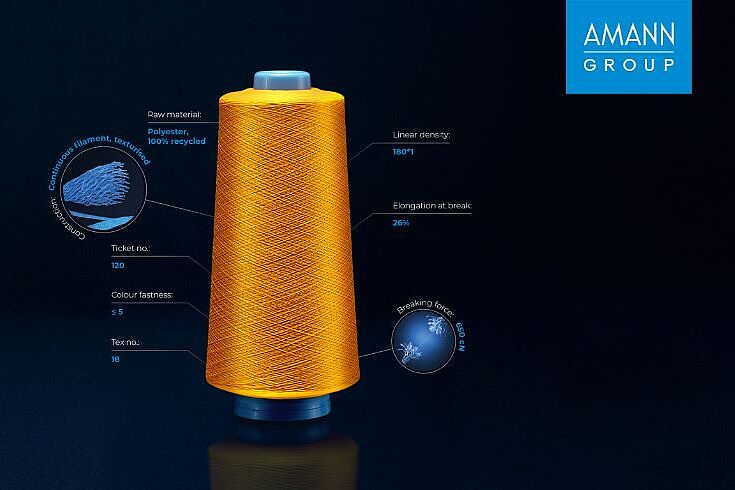
Selecting the right sewing thread is essential for achieving reliable sewing performance, consistent seam quality and durable end products. While material and thread size are important factors, the construction of a sewing thread has an equally significant influence on sewability, tensile strength, elongation, abrasion resistance and the appearance of the finished seam.
The latest article in the AMANN Knowledge Hub provides a comprehensive overview of the most common sewing thread construction types used in industrial sewing and embroidery. It explains how spun threads, core spun threads, continuous filaments, textured filaments, wrapped yarns and braided continuous filaments are constructed, what distinguishes their properties and which applications they are best suited for.
Understanding thread construction helps manufacturers, product developers and sewing specialists choose the right thread for specific materials, seam requirements and production processes. Different thread constructions offer different advantages depending on the application, whether for apparel, footwear, automotive interiors, home textiles, embroidery or technical textiles.
The article also explains how sewing thread construction influences important performance characteristics such as seam strength, stitch appearance, sewing efficiency, abrasion resistance and processing reliability. By understanding these differences, textile professionals can optimise sewing processes, improve product quality and make more informed thread selection decisions.
Whether you are looking to deepen your textile knowledge, compare different thread types or select the most suitable sewing thread for your next project, this comprehensive guide provides valuable technical insights and practical information for everyday manufacturing.
Discover the full article:
https://www.amann.com/knowledgehub/amann-wiki/sewing-thread-construction-explained-types-properties-and-applications/