

Conductive sewing and embroidery threads for smart textiles
Conductive textiles combine traditional textile properties such as flexibility and wearability with integrated electrical functions. Conductive sewing and embroidery threads make it possible to create conductive paths, sensor points and textile electrodes directly within textile structures, opening up applications in smart textiles, wearables and medical textiles.
For conductive textile applications, AMANN recommends Silver-tech, a silver-coated polyamide/polyester hybrid sewing and embroidery thread developed for conductive seams and surfaces. It can be processed using conventional sewing and embroidery technologies and enables electrical functions to be integrated directly into textiles.
Embroidered conductive tracks and sensor points
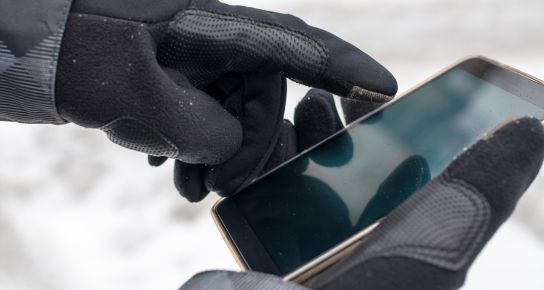
AMANN sewing thread recommendation for conductive textiles
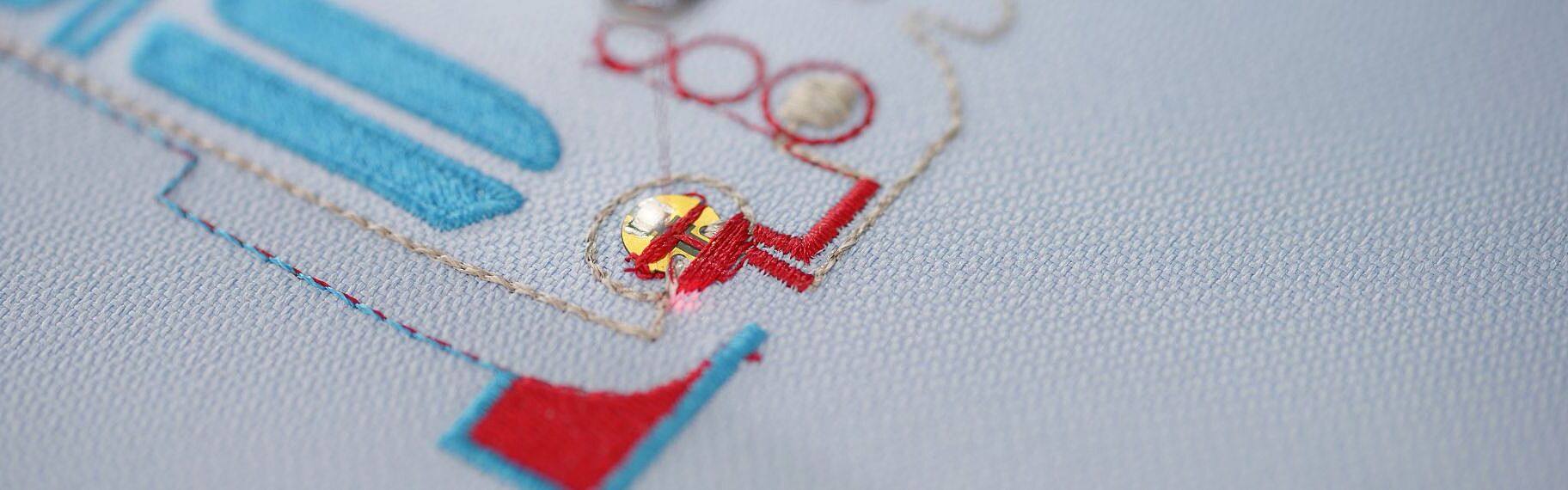
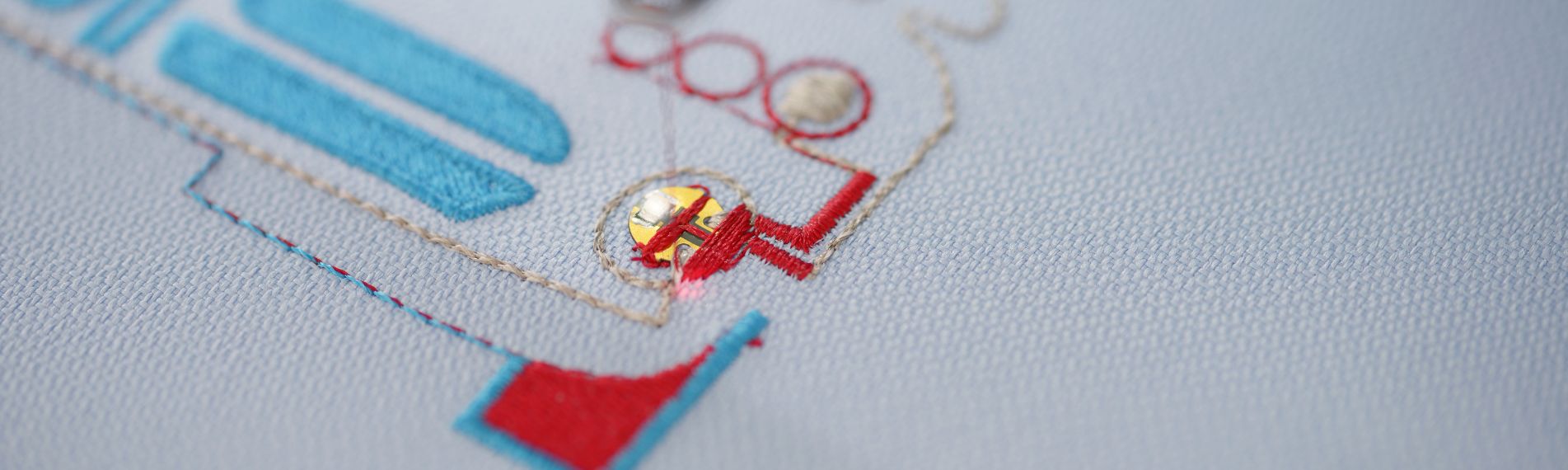
Embroidery makes it possible to position conductive structures precisely and reproducibly within a textile. Conductive threads can be used to create embroidered conductive tracks, sensor points and connections while maintaining the flexibility of the textile structure.
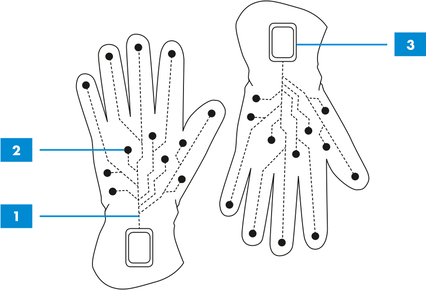
For the application shown above, AMANN recommends Silver-tech Ticket 120 / Tex 28 for embroidered conductive tracks and sensor points using a 301 lockstitch. Silver-tech is used as both needle and bobbin thread.
| Seam no. | Seam type | Stitch type | Needle thread | Bobbin or looper thread | Needle size min. Nm | Needle size min. No | ||||
|---|---|---|---|---|---|---|---|---|---|---|
| Article | Ticket no. | Tex no. | Article | Ticket no. | Tex no. | |||||
| 1 | Embroidered conductor | 301 lockstitch | Silver-tech | 120 | 28 | Silver-tech | 120 | 28 | 75 | 11 |
| 2 | Embroidered sensor point | 301 lockstitch | Silver-tech | 120 | 28 | Silver-tech | 120 | 28 | 75 | 11 |
| 3 | Power connector | 301 lockstitch | - | - | - | - | - | - | - | - |
Requirements for conductive sewing and embroidery threads
The thread is an integral part of the electrical and textile structure. Depending on the application and required functionality, important requirements may include:
- reliable electrical conductivity
- consistent electrical resistance
- precise and reproducible processing
- reliable sewing and embroidery performance
- flexibility within the textile structure
- suitability for conductive seams and surfaces
- compatibility with the selected textile construction
- reliable contact between conductive textile elements
The right combination of conductive thread, thread size, stitch type, stitch density, needle size and textile construction helps achieve reliable conductive structures while maintaining the textile character of the finished application.
Recommended conductive thread: Silver-tech
Silver-tech is AMANN’s conductive hybrid sewing and embroidery thread with silver content. It consists of silver-coated polyamide/polyester and was developed specifically for conductive textile applications.
Silver-tech can be used for conductive seams and surfaces as well as textile electrodes functioning as sensors and actuators. It is also suitable for seam positions requiring antimicrobial characteristics and is certified according to OEKO-TEX® STANDARD 100, Product Class I, Appendix 6.
For the application shown on this page, Silver-tech Ticket 120 / Tex 28 is used with a minimum needle size of Nm 75 / No. 11. This thread size has an electrical resistance of less than 530 Ω/m. Silver-tech is also available in Ticket 50 / Tex 62 with a resistance of less than 150 Ω/m for applications requiring different processing and conductivity characteristics.
Choosing the right conductive thread for smart textiles
There is no single conductive thread specification or processing parameter suitable for every smart textile application. The appropriate solution depends on several factors, including:
- required electrical conductivity
- required electrical resistance
- textile material and construction
- type of conductive structure
- sensor or actuator design
- stitch type and stitch density
- length and geometry of the conductive path
- thread size
- needle size
- requirements of the finished smart textile system
The electrical performance of the finished textile depends not only on the conductive thread itself, but also on the complete textile and electrical construction.