


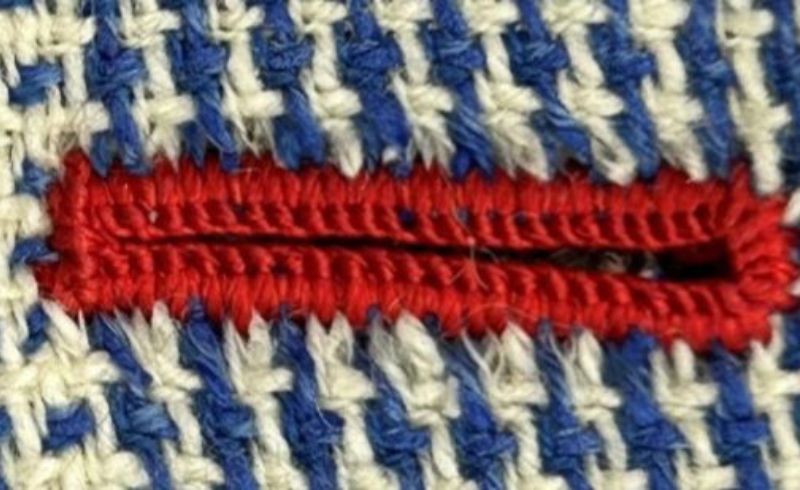
A buttonhole may be a small detail, but in high-quality jackets, suits and bespoke tailoring, it can reveal a great deal about craftsmanship and garment quality. A clean, precise and symmetrical eyelet buttonhole requires the right combination of sewing thread, fabric, interlining, gimp thread, machine settings and programming.
Our latest AMANN Knowledge Hub article takes a closer look at eyelet buttonholes, jacket buttonholes and the sewing technology behind high-quality buttonhole production.
From hand-sewn to machine-made buttonholes
Traditional hand-sewn buttonholes are closely associated with bespoke tailoring and premium garment manufacturing. Particularly distinctive are Milanese buttonholes, which use a special spiral stitching technique and remain a hallmark of hand craftsmanship.
Modern buttonhole machines can achieve highly precise and refined results as well. But producing a machine-made eyelet buttonhole with a clean, defined and almost hand-stitched appearance requires more than the right machine. Sewing thread construction, thread size, gimp thread, fabric properties, interlining and machine programming all influence the final buttonhole appearance.
Which sewing thread is suitable for buttonholes?
The right sewing thread for buttonholes depends on the required look, garment material and application. Polyester core-spun threads can provide reliable sewing performance and a classic appearance, while continuous filament sewing threads can create particularly sharp, defined stitches with a silky sheen.
At the AMANN Technical Advisory Service, different thread combinations, gimp threads and materials can be tested to develop buttonhole solutions for mass production, tailor-made garments and decorative applications.
Want to know what separates a good buttonhole from a great one?
Discover the hidden details behind the perfect eyelet buttonhole in the AMANN Knowledge Hub.
Read the article:
https://www.amann.com/knowledgehub/blog/ggg/